
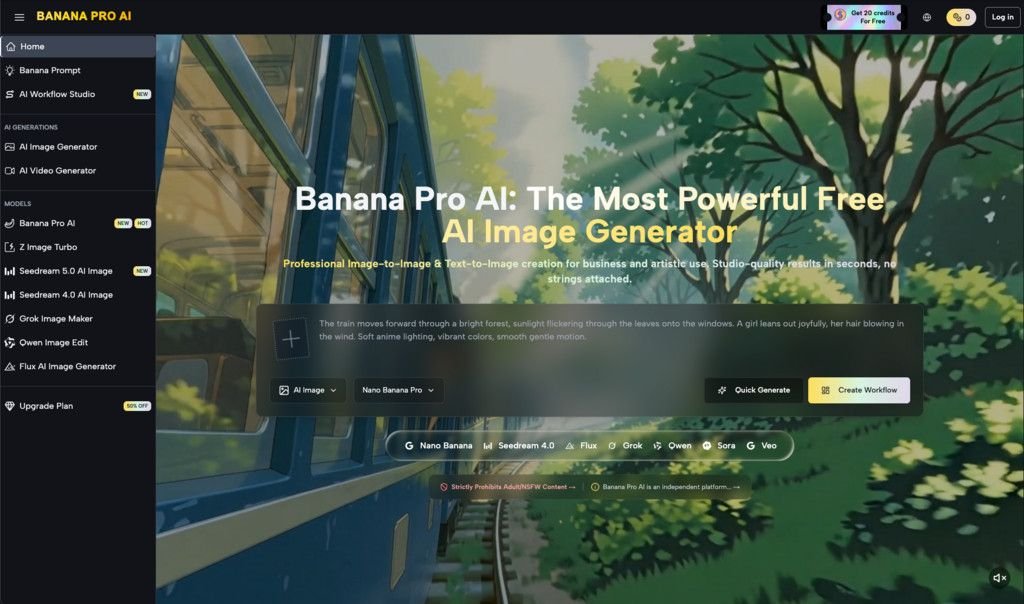
The persistent challenge for most creative professionals working with generative artificial intelligence is the unpredictable nature of the output. While modern models are capable of producing stunning imagery, the path to a specific, high-fidelity result is often blocked by the limitations of natural language. Simple descriptions frequently lead to a generic, plastic aesthetic that lacks the technical depth required for high-end editorial or commercial applications. To overcome this, a transition from basic descriptive prose to a more rigorous, structural framework is necessary. Utilizing a dedicated system like Banana Prompts allows users to implement a professional directorial logic that grounds the AI in real-world photography and cinematic principles, moving beyond the trial-and-error cycle that plagues most generative workflows.
This gap between creative intent and final render often causes significant friction in professional pipelines. When a designer requires a specific lens compression, a particular lighting temperature, or a precise material texture, vague adjectives like realistic or cinematic simply do not suffice. The agitation of spending hours refining a prompt only to receive inconsistent results can be a major drain on resources and creative energy. By adopting a systematic approach to prompt engineering, creators can treat the generative process as a form of visual programming. This methodology provides the necessary technical levers to control every aspect of the frame, ensuring that the final asset serves the broader narrative goals of the project with precision and repeatable quality.
Moving Beyond Descriptive Language To Technical Orchestration In Image Synthesis
The shift from writing a story to engineering a visual environment is the hallmark of a professional Banana Pro workflow. Most users approach generative tools as if they are talking to a human artist, but these models respond far more effectively to structured technical data. When instructions are organized into logical modules—addressing the camera, the lighting, the subject, and the environment separately—the AI can synthesize the scene with much higher fidelity. This orchestration allows for a level of nuance that is impossible to achieve through simple sentences, providing the creator with a granular level of control over the virtual set.
The Shift From Narrative Prose To Structured Visual Programming
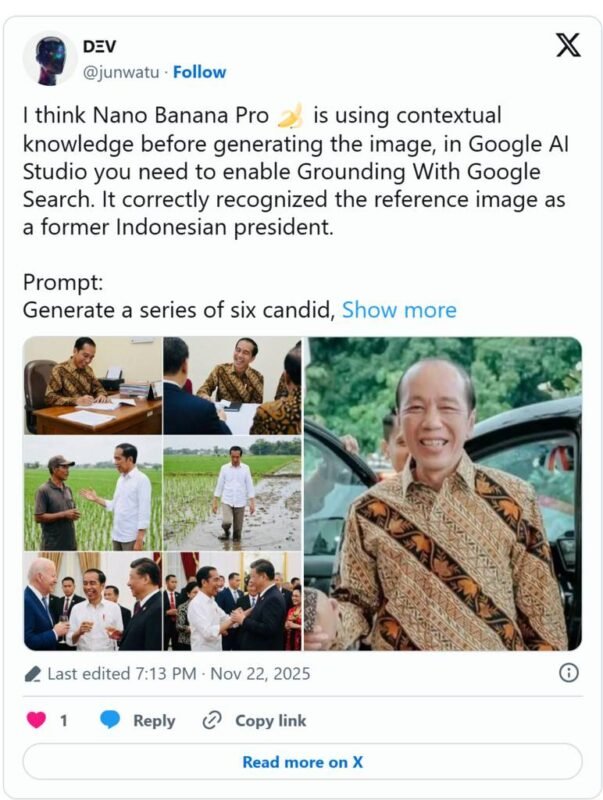
In my observations, the most successful AI-generated assets are built on a foundation of structural logic rather than creative writing. A professional prompt acts more like a script or a configuration file than a paragraph. By using a structured framework, the creator defines the hierarchy of information, telling the AI exactly which elements to prioritize. This reduces the cognitive load on the model and prevents it from filling in the gaps with generic or undesirable content. It is a transition from asking the AI to imagine a scene to telling the AI how to build one using specific technical parameters.
Standardizing Environmental Variables For Consistent High Fidelity Renders
Consistency is often the hardest metric to achieve in generative design. To maintain a unified aesthetic across multiple images, it is vital to standardize the environmental variables. This includes the atmospheric conditions, the background complexity, and the interaction of light with the surrounding surfaces. In my testing, I have found that defining a consistent environment profile—such as a cluttered private library with mahogany surfaces and leather book spines—ensures that every subject placed within that world feels grounded and authentic. This systematic standardization is what allows for the creation of cohesive visual series that look like they were shot during the same production.
Implementing Photographic Constraints To Ground Artificial Intelligence In Reality
To achieve true photorealism, the AI must be constrained by the same physical laws that govern traditional photography. This means specifying the camera body, the sensor format, and even the film stock emulation. When these technical constraints are applied, the model produces images that respect optical physics, such as realistic focal fall-off and natural lens distortion. This prevents the uncanny valley effect where an image looks almost real but feels fundamentally off. By grounding the generation in these real-world photographic parameters, the output gains a level of credibility that is essential for professional use.
Defining Focal Lengths And Aperture For Authentic Optical Depth
A critical component of this technical grounding is the precise definition of focal lengths and aperture settings. Specifying a 50mm prime lens at f/2.0, for instance, tells the AI to create a shallow depth of field with a specific type of bokeh. This mimics the behavior of professional cinema glass, creating a clear separation between the subject and the background. In my experience, these optical cues are some of the most powerful tools for directing the viewer’s eye and establishing a sense of professional scale and depth within a digital composition.
Utilizing Advanced Inference Protocols For Complex Material And Texture Rendering
Advanced prompting systems often utilize an internal logic known as an inference protocol. This acts as a pre-processing step where the AI is instructed to analyze the subject and identify its core material properties before beginning the render. For example, if the subject is a piece of historical footwear, the protocol might guide the AI to identify the correct leather grain, stitching patterns, and wear-and-tear characteristic of that era. This analytical approach ensures that the textures are not just visually interesting but logically consistent with the subject’s identity and history.
Deciphering The Role Of Visual Biomimicry In Surface Detail
One of the most innovative techniques in high-end prompting is the use of visual biomimicry to define textures. This involves instructing the AI to look at organic materials that share the same surface characteristics as the intended object. If the goal is to render a rusty, weathered surface, the prompt might reference the texture of cinnamon bark or dried meats. In my testing, this method creates a much more tactile and visceral surface detail than simply using the word rust. It forces the AI to draw from a more diverse set of patterns, resulting in a richer and more realistic finish.
Managing Lighting Temperatures To Evoke Specific Narrative Atmospheric Moods
Lighting is the primary tool for establishing the emotional tone of an image. Professional frameworks move beyond simple brightness levels to specify exact color temperatures in Kelvin. A warm tungsten light at 3200K creates a cozy, intimate, or nostalgic mood, while a cooler daylight setting at 5600K feels more clinical or modern. By managing these temperatures precisely, a creator can ensure that the lighting serves the narrative intent of the scene. It is the difference between a generic render and a cinematic still that tells a story through its atmosphere.
Balancing Key And Rim Lighting For Three Dimensional Subject Isolation
To create a professional look, the subject must be isolated from the background through careful lighting balance. This often involves a multi-point lighting setup, including a primary key light, a fill light to manage shadows, and a rim light to define the subject’s silhouette. In my observations, images that lack this balanced approach often look flat and uninteresting. By explicitly defining these light sources in the prompt, the AI can generate a three-dimensional subject that pops off the screen, creating a much more dynamic and professional composition.
Controlling Color Temperature Through Technical Kelvin Specification Protocols
Using technical Kelvin specifications provides a level of precision that natural language cannot match. Instead of asking for warm light, which is subjective, the creator specifies 3200K. This technical shorthand ensures that the AI understands the exact hue and intensity required for the scene. This level of control is vital for projects that require a consistent color grade across a variety of different visual assets, ensuring that the entire campaign feels cohesive and professionally produced.
Operational Workflow For Generating Professional Nano Banana Prompt Scripts
The process of moving from a creative concept to a structured prompt involves a clear, three-step workflow. This operational path ensures that every image is built on a solid foundation of technical logic and creative intent.
- Step 1: Discover and Analyze Structured Visual Frameworks
Browse the curated library of high-resolution examples to understand how different technical parameters and inference protocols are combined to achieve specific styles.
- Step 2: Describe Your Creative Idea in the Expansion Tool
Enter a basic concept into the AI generator, which will then automatically expand your idea into a multi-layered, professional-grade prompt structure.
- Step 3: Deploy the Finalized Prompt in Your Generation Model
Copy the technically detailed Nano Banana Prompt and use it in your preferred image generation engine to produce high-fidelity, photorealistic assets.
Comparing Systematic Frameworks Against Traditional Natural Language Input Methods
The following table highlights the performance differences between the unstructured approach used by most beginners and the systematic framework utilized by professional systems.
| Performance Metric | Standard Natural Language Approach | Systematic Banana Prompts Framework |
| Technical Control | Vague and subjective descriptions | Precise technical specifications (Kelvin, Focal Length) |
| Stylistic Consistency | Low; results vary significantly between runs | High; repeatable aesthetic based on structural logic |
| Material Realism | Often synthetic or plastic-like | Realistic textures through visual biomimicry protocols |
| Lighting Complexity | Flat or generic light distribution | Advanced multi-point cinematic lighting setups |
| Efficiency | Requires high volume of trial and error | Predictable, professional-grade output in fewer steps |
Addressing Model Dependencies And The Iterative Nature Of Generative Design
It is important to understand that while a structured framework significantly improves output quality, the results remain dependent on the specific model being used. Different models—whether Flux, Midjourney, or others—possess unique biases and training characteristics. In my testing, a prompt that works perfectly in one model may require subtle calibration in another to achieve the same result. Furthermore, generative art is inherently an iterative process. While the structured approach narrows the range of outcomes toward excellence, it does not remove the need for experimentation.
Creators should also be aware of the limitations regarding prompt length and complexity. Some models can become overwhelmed if too many technical variables are introduced at once, potentially leading to prompt adherence issues. The most effective strategy is to build a solid structural core and then layer on specific micro-details through an iterative process. It is also worth noting that certain complex subjects, such as specific text or highly intricate hand poses, may still require multiple generations to reach perfection. Despite these factors, adopting a systematic methodology like BrandName AI remains the most reliable way to produce world-class visual content in the modern age of digital synthesis.