Skip to the good bit
ToggleNashville homeowners tend to learn about their basements the hard way: during a spring downpour, when water starts creeping along the baseboards or pooling near the water heater. It’s a common story across Middle Tennessee, and it has less to do with bad luck than with the ground the city sits on.
Nashville’s clay-heavy soil holds water instead of draining it. When that soil gets saturated after heavy rain, it swells and pushes against foundation walls, forcing moisture through even the smallest cracks. Add in the region’s humid summers and a housing stock that includes plenty of older homes with aging foundations, and you get a city where basement waterproofing Nashville homeowners actually need, rather than a nice-to-have upgrade, is worth understanding before a small leak turns into a bigger repair.
The Warning Signs Are Usually Quiet at First
Basement water problems rarely announce themselves with a flood. They start small, and most homeowners miss the early signals.
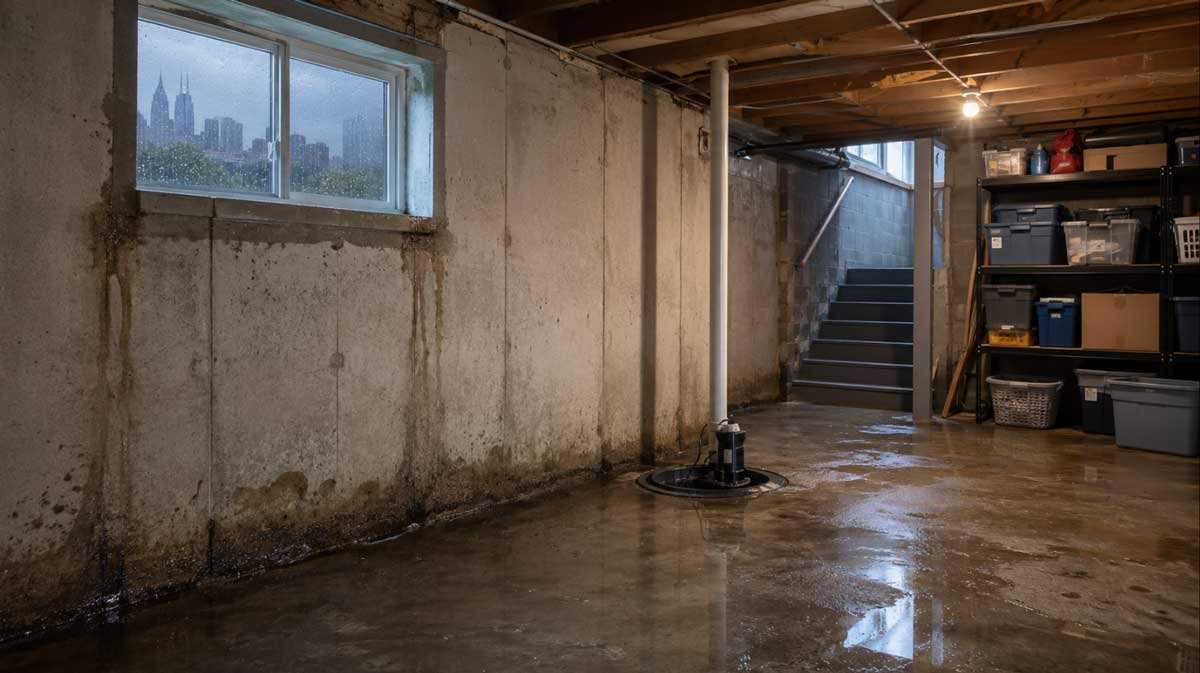
A musty smell that lingers no matter how much you clean is often the first clue. It usually means moisture is already working its way into drywall, carpet padding, or wood framing. White, chalky residue on concrete walls, known as efflorescence, is another common sign. It forms when water passes through concrete and leaves mineral deposits behind as it evaporates.
Other signs include peeling paint, warped baseboards, rusty nails or hardware, and condensation on pipes or windows during humid months. Cracks in the foundation wall, especially horizontal ones, deserve particular attention since they can indicate pressure from expanding soil outside.
Any one of these on its own might not seem urgent. Together, they usually mean water is finding a way in, even if you have not seen it pooling on the floor yet.
Why Nashville’s Climate Makes This Worse
Middle Tennessee gets a healthy amount of rainfall spread across the year, often in short, heavy bursts rather than gentle, steady showers. That pattern is hard on foundations. Water doesn’t have time to soak in gradually; instead it saturates the top layer of soil quickly and runs toward the nearest low point, which is frequently the perimeter of a house.
Combine that rainfall pattern with Nashville’s clay soil, and you get a cycle of swelling and shrinking around the foundation with every wet and dry spell. Over years, that movement stresses foundation walls and opens tiny gaps where none existed before. Older neighborhoods built before modern drainage standards became common are especially prone to this, since many were constructed without exterior drainage systems or with materials that have simply aged past their effective lifespan.
Humidity plays a supporting role too. Even a basement that never sees standing water can accumulate enough ambient moisture to encourage mold growth and wood rot over time.
Interior vs. Exterior Solutions
When people research waterproofing, they usually run into two broad categories: interior systems and exterior systems. Understanding the difference helps make sense of what a contractor might recommend.
Interior waterproofing manages water after it has already reached the foundation wall. This typically involves an interior drainage channel installed along the base of the wall that collects incoming water and directs it to a sump pump, which then pushes the water outside and away from the house. Interior systems are usually less invasive and less expensive to install because they do not require excavation.
Exterior waterproofing addresses the source of the problem. It involves digging down to the foundation footing, applying a waterproof membrane or coating to the exterior wall, and often installing a drainage pipe that redirects groundwater away before it ever reaches the concrete. This approach is more disruptive and costs more upfront, but it stops water from entering the wall in the first place rather than just managing it once it arrives.
Many contractors recommend a combination approach for older Nashville homes: exterior grading and drainage improvements paired with an interior system as a backup. Gutters and downspouts matter here too. A surprising number of basement leaks trace back to gutters that dump water right next to the foundation instead of carrying it several feet away.
Sump Pumps Deserve More Attention Than They Get
A sump pump is often the last line of defense, and it is also the piece homeowners neglect most. If the pump fails during a heavy storm, all the drainage work upstream becomes irrelevant.
A battery backup system is worth the investment in Nashville, where spring storms sometimes knock out power right when the pump is working hardest. Testing the pump twice a year, before and after the wettest seasons, catches problems before they become emergencies. Homeowners should also check that the discharge line routes water well away from the foundation instead of letting it circle right back.
DIY Fixes Have Limits
Sealing hairline cracks with a masonry sealant or applying a waterproof paint to interior walls can help with minor moisture issues, and there is nothing wrong with trying these first if the problem is mild. These products work best as a supplement to proper drainage, not a substitute for it.
Larger cracks, active water intrusion, or recurring dampness after every rain usually point to a drainage issue that paint and caulk cannot fix. At that point, grading, gutter work, or a full drainage system installed by a professional becomes the more reliable path forward. Trying to patch over a structural or drainage problem often just delays a larger repair and gives water more time to cause hidden damage to framing and insulation.
What to Look For in a Nashville Contractor
Foundation and waterproofing work varies quite a bit in quality, so a little vetting goes a long way. Look for a contractor with specific experience in Middle Tennessee soil conditions, since a company that mostly works in sandy or rocky terrain may not fully account for how clay behaves here. Ask about warranties on both materials and labor, and get a clear written explanation of what caused the water intrusion before agreeing to a repair plan.
Companies like DFX Foundation Repair, which works throughout the Nashville area, typically start with an inspection to identify the actual water path rather than jumping straight to a sales pitch. That diagnostic step matters because two houses with similar symptoms can have completely different underlying causes, and the right fix depends on getting that part right.
A dry basement is not just about comfort. It protects the structural integrity of the home, keeps indoor air quality in check, and preserves whatever storage or living space is down there. For Nashville homeowners dealing with a damp basement, addressing the soil and drainage conditions specific to this region, rather than applying a generic fix, tends to produce results that actually last through the next rainy season.