Skip to the good bit
ToggleWallingford, Connecticut, has a long industrial history shaped by manufacturing and skilled trades, where some workers may have encountered asbestos-containing materials before people widely understood the dangers of exposure. Because mesothelioma can develop many years after exposure, a diagnosis today may lead patients and families to look closely at past jobs, work sites, products, or secondary exposure at home. Understanding the exact diagnosis is also important when considering medical care and whether there may be grounds for legal action.
Sarcomatoid mesothelioma is a rare form of the disease associated with asbestos exposure and is identified by distinctive spindle-shaped cancer cells. It most often occurs in pleural mesothelioma, though it can also affect the abdominal lining. This form can spread to distant organs and may respond poorly to standard chemotherapy. For Wallingford patients considering their treatment and legal options, knowing the sarcomatoid mesothelioma cell type can help clarify pathology findings, guide conversations with specialists, and provide important context when investigating when and where asbestos exposure may have occurred.
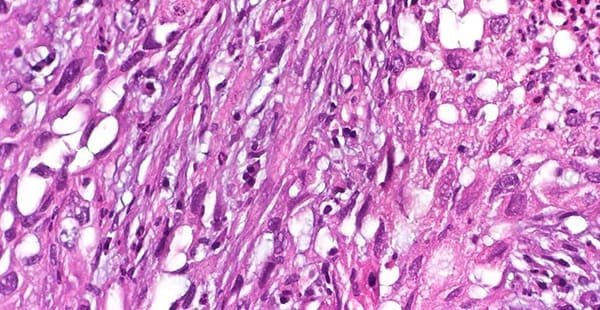
What Sarcomatoid Cells Look Like
Sarcomatoid cells are elongated and oval, with a large nucleus, sometimes with multiple nuclei. Pathologists also use terms such as spindle cell mesothelioma and sarcomatoid mesothelioma, which can appear in pathology reports.
Pathology findings help doctors distinguish sarcomatoid cells from other mesothelioma types during diagnosis and treatment planning. Doctors identify sarcomatoid mesothelioma through spindle-shaped cells and related pathology findings. It accounts for about 10% of pleural cases and 4% to 8% of peritoneal cases. About 300 sarcomatoid cases occur each year in the United States.
How Asbestos Exposure Causes Sarcomatoid Mesothelioma
Asbestos exposure causes sarcomatoid mesothelioma, according to medical information. Inhaled or swallowed asbestos fibers can remain in body tissues and trigger irritation, inflammation, and genetic changes that cause cancer.
Mesothelioma has a latency period lasting 10 to 50 years after asbestos exposure in some patients. Symptoms can therefore appear decades later, making it difficult to connect the exposure history with the diagnosis.
Symptoms That Can Prompt Testing
Shortness of breath and chest pain are common symptoms when sarcomatoid mesothelioma affects the pleura. Doctors also consider findings such as fluid around the lungs when evaluating suspected pleural disease.
Peritoneal sarcomatoid mesothelioma affects the abdominal lining instead, and symptoms depend on tumor location and disease extent. Imaging and a tissue sample together help doctors identify the cancer and its cell type.
How Doctors Confirm the Diagnosis
Imaging tests can locate tumors or fluid, but pathology establishes the cell type. Doctors collect tumor tissue through a biopsy, then laboratory testing examines the sample for features and markers associated with mesothelioma.
Diagnosis can be difficult because sarcomatoid cells sometimes resemble other cancers under the microscope. A pathology report helps distinguish mesothelioma from sarcomatoid carcinoma, lymphoma, and metastatic renal cell carcinoma.
Why the Cell Type Matters for Treatment
Sarcomatoid mesothelioma responds poorly to chemotherapy, which affects treatment planning. Trusted sources report an average survival of about nine months with systemic chemotherapy and about 18 months with immunotherapy.
Immunotherapy is the preferred first-line treatment described for patients with sarcomatoid mesothelioma. Preferred regimens for this cell type include nivolumab plus ipilimumab and pembrolizumab combined with chemotherapy.
Surgery is uncommon in sarcomatoid cases, but doctors continue to reassess its role after immunotherapy. Treatment decisions depend on cancer stage, tumor location, overall health, patient goals, and prior treatment.
Rare Sarcomatoid Subtypes
Pathologists can also identify less common sarcomatoid subtypes. These include desmoplastic, heterologous, and transitional mesothelioma, which have distinct tissue patterns and clinical features.
What Affects Prognosis
Life expectancy varies among patients with sarcomatoid mesothelioma. Medical resources identify cancer stage, patient age, gender, and overall health, treatment approach, and tumor location as factors that affect prognosis.
Pleural and peritoneal tumors require different treatment considerations because disease location affects the care plan. Doctors should review the pathology report alongside imaging, disease stage, and the patient’s health before recommending treatment.
What Patients Should Discuss With a Specialist
A specialist should review the pathology report alongside imaging and other diagnostic findings. Patients can ask which cell type the experts confirmed, whether the disease is pleural or peritoneal, and how those findings affect treatment options.
The treatment plan should also account for cancer stage, overall health, and patient goals when selecting care. A mesothelioma specialist can explain whether immunotherapy, chemotherapy, surgery, radiation, or supportive care fits the patient’s circumstances.
Conclusion
A sarcomatoid diagnosis provides beneficial information about tumor biology and treatment planning. Spindle-shaped cells distinguish this type from epithelioid and biphasic mesothelioma, while pathology confirms the diagnosis. Patients should review the pathology report with a mesothelioma specialist and ask how the cell type, stage, tumor location, and health affect available treatments. Those details provide a practical basis for evaluating immunotherapy and discussing the next recommended care step with the care team.