Skip to the good bit
ToggleDrive through any neighborhood after sunset, and you’ll notice something. Some homes fade into darkness, barely visible from the street. Others glow with warmth, their details highlighted, pathways clear, landscaping showcased. The difference isn’t budget or home size. It’s planning.
Most homeowners spend hours perfecting their interiors while leaving their exteriors to function in shadows. Your home’s exterior is what neighbors see daily, what guests encounter first, and what buyers judge within seconds. When the sun sets, poorly planned outdoor spaces become safety hazards and security risks.
The fix doesn’t require elaborate systems or huge investments. Strategic placement of quality exterior lighting changes how your property works after dark, making outdoor space more usable while improving both safety and looks. Knowing where light belongs, and where it doesn’t, separates properties that merely exist at night from those that shine.
Beyond Security: Real Benefits of Outdoor Lighting
Security is just one advantage of proper outdoor lighting. Yes, well-lit properties deter criminals who prefer shadows. Motion-activated lights startle intruders while alerting homeowners to movement. These benefits matter, but there’s more.
Think about how lighting extends your living space. That backyard patio becomes useless after dinner without good light. The front walkway turns dangerous when guests navigate uneven pavers in the darkness. Garden beds you’ve cultivated disappear once twilight fades.
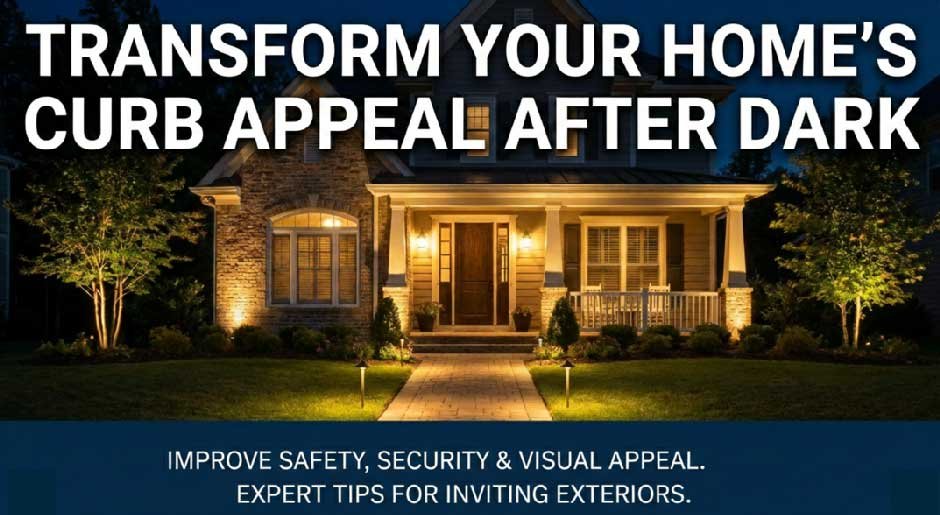
Good lighting creates an atmosphere that rivals any interior design. Uplighting showcases mature trees, turning them into sculptures. Path lights guide movement while defining borders. Wall-mounted fixtures frame entryways, signaling welcome before visitors reach your door. The right outdoor lighting doesn’t just illuminate. It transforms ordinary spaces into evening destinations.
Property value increases with quality outdoor lighting. Real estate professionals note that homes with thoughtful exterior lighting photograph better, show better during evening appointments, and get higher offers. The 2026 National Association of Realtors Exterior Features Report found professionally lit properties sold 8% faster than comparable homes with basic builder fixtures.
Layering Light for Maximum Impact
Interior designers layer ambient, task, and accent lighting to create dimensional spaces. The same works outdoors, though execution differs. Outdoor environments need durability, weather resistance, and placement that accounts for changing seasons and plant growth.
Start with basic lighting along pathways and entryways. These fixtures focus on function, ensuring safe movement from driveway to door, garage to backyard, patio to garden. LED path lights work well here, using little energy while providing consistent light year-round. Space them eight to ten feet apart along walkways, adjusting based on brightness and path width.
Accent lighting adds drama and visual interest. Uplights at tree bases cast branches against walls or sky. Spotlights highlight features like stone columns, interesting rooflines, or decorative shutters. These create depth and shadow play that flat overhead lighting never achieves. The key is restraint. Too much light looks bad, washing out the features you’re trying to show.
Task lighting serves specific needs. Under-deck lighting illuminates steps and seating areas. Lights in pergolas or gazebos extend outdoor living hours. Fixtures near grills, outdoor kitchens, or dining areas support evening activities. Think about brightness, beam angle, and color temperature. Warm tones (2700K to 3000K) create inviting spaces, while cooler temperatures feel harsh outdoors.
Weather Protection Matters
Indoor lighting failures mean replacing a bulb or resetting a breaker. Outdoor lighting failures often come from moisture, corroded connections, or damaged parts. The elements punish poor installations. Rain, snow, humidity, temperature swings, and sun exposure all challenge exterior fixtures and their electrical connections.
This makes weatherproofing critical from day one. Using quality exterior outlet covers protects connection points from moisture damage that causes short circuits, corrosion, and fire hazards. These covers seem like small details, but they’re essential safeguards that determine whether your lighting system works reliably for years or needs constant fixing. Professional electricians never skip weatherproofing because they know the long-term cost of cutting corners on exterior electrical protection.
Fixture ratings show weather resistance through IP (Ingress Protection) codes. IP65-rated fixtures resist water jets from any direction, good for most homes. IP67 ratings handle temporary submersion, needed for ground-level path lights in areas with standing water. Lower ratings like IP44 work for covered porches but fail quickly when exposed to weather.
Material choice impacts how long fixtures last. Brass and copper develop attractive patinas while resisting corrosion. Powder-coated aluminum offers durability at a lower cost. Plastic housings work for tight budgets but become brittle after years of sun, cracking, and yellowing. Stainless steel provides excellent weather resistance, though it costs more upfront.
Don’t overlook wire quality and connections. Solid copper wire handles outdoor conditions better than cheaper options. Direct burial cables need a proper conduit in most areas. Wire nuts corrode outdoors. Use waterproof connectors made for exterior use. Bad connections cause most outdoor lighting failures within five years.
Smart Controls Change Everything
Traditional timers and photocells still work, but smart controls offer better features. Modern systems let you adjust lighting from your phone, whether you’re in bed or traveling. Dimming allows adjustments based on activity. Scheduling ensures lights turn on when needed, saving energy without sacrificing security or looks.
Integration with home automation creates sophisticated behavior. Lights can gradually brighten as sunset approaches, mimicking natural transitions. Motion sensors activate specific zones only when needed, preserving darkness while ensuring safety when someone approaches. Vacation modes randomize lighting patterns, creating the appearance of occupancy that deters criminals better than lights that turn on at identical times every night.
Smart controls also enable seasonal adjustments without climbing ladders or resetting timers. As days shorten in autumn, your system compensates automatically, keeping lights active longer without manual work. Energy monitoring tracks consumption, helping identify fixtures that might benefit from LED upgrades.
Color-changing features add flexibility for holidays and special occasions. The same fixtures that provide warm white light daily can shift to seasonal colors for celebrations without installing temporary decorations. While not essential, this appeals to homeowners who enjoy customizing their property’s appearance throughout the year.
Common Installation Mistakes
Even quality fixtures fail when installed wrong. Understanding common errors helps homeowners avoid disappointment and wasted money.
Placing lights too close together creates overlapping pools that waste energy while producing flat, boring light. Space fixtures appropriately to maintain consistent levels without overlap. Use manufacturer specs as starting points, then adjust based on your property’s conditions and desired effects.
Aiming fixtures directly at viewing positions creates blinding glare that ruins the atmosphere you’re trying to create. Position lights to illuminate subjects, not eyes. Path lights should cast downward, uplights should angle away from primary sightlines, and spotlights should highlight features without creating uncomfortable brightness.
Bad glare doesn’t just affect your property. Poorly aimed fixtures annoy neighbors, violate dark sky rules in some areas, and contribute to light pollution. Shield lamps, use narrow beam angles, and position fixtures thoughtfully to keep light where it belongs.
Ignoring future maintenance creates access problems. Install fixtures where bulbs can be replaced without ladders when possible. Ensure transformers and control boxes stay reachable. Bury wires deep enough to avoid garden tool damage but mark their locations. Document your system with photos and notes showing fixture models, wire runs, and connection points. Future you will appreciate this.
Underestimating power needs causes circuit overloads and transformer failures. Calculate total wattage for your installation, then choose transformers rated at least 20% above that number. This buffer handles voltage drop over distance and leaves capacity for future additions.
Maintenance Keeps Systems Working
Outdoor lighting needs more maintenance than interior fixtures due to environmental exposure. Regular care prevents minor issues from becoming expensive problems.
Clean fixture lenses seasonally to maintain brightness. Dirt, pollen, and spider webs build up fast, reducing effective brightness by 30% or more. Warm water and mild soap handle most cleaning. Avoid harsh cleaners that scratch lenses and reduce light transmission permanently.
Inspect connections annually, especially before winter in cold climates. Moisture causes corrosion that increases resistance and generates heat. Corroded connections spark fires. Replace any connection showing green corrosion, discoloration, or a loose fit. Apply dielectric grease to protect renewed connections from future moisture.
Trim plants regularly around fixtures. Overgrown vegetation blocks light, traps moisture against fixtures, and creates fire hazards when leaves touch hot bulbs. Growth changes dramatically over the years. Lights perfectly positioned at installation may need adjustment or relocation as trees mature and gardens expand.
Test GFCI outlets monthly by pressing the test and reset buttons. These safety devices prevent electrocution by immediately cutting power when they detect ground faults. Failed GFCIs offer no protection. Replace them right away rather than waiting.
Professional Installation vs DIY
Low-voltage lighting systems invite DIY installation with their relative safety and simple connections. Many homeowners successfully install basic path lighting and spotlights. But knowing when to hire professionals saves money long-term by preventing mistakes that need expensive corrections.
Line-voltage installations (120V) require licensed electricians in most areas. These systems pose electrocution risks and fire hazards when installed wrong. Permits ensure work meets code. Insurance often denies claims for damage caused by unpermitted electrical work.
Complex low-voltage systems benefit from professional design even if you handle installation. Lighting designers understand spacing, angles, and layering techniques that create professional results. Their expertise prevents the trial-and-error approach that leads to wasted fixtures and disappointing outcomes.
Difficult installations warrant professional help regardless of voltage. Running wire through finished structures, mounting fixtures on tall walls, or working near underground utilities introduces complications best handled by experienced contractors. The modest cost for professional installation protects against injuries and property damage that dwarf initial savings from DIY attempts.
Creating Your Outdoor Lighting Plan
Good outdoor lighting begins with planning, not impulse purchases. Start by walking your property at night, noting areas that feel unsafe, unwelcoming, or just dark. Take photos from the street and from interior windows to understand how your home looks after dark. These observations guide fixture selection and placement better than guessing or copying neighbors.
Sketch your property, including structures, mature plants, pathways, and seating areas. Mark security priorities like entry doors, dark corners, and blind spots. Identify architectural features worth highlighting. Note existing electrical access points. This visual plan helps calculate quantities, estimate costs, and ensure complete coverage before buying anything.
Consider phasing installation if the budget is tight. Focus on safety-critical areas first: front and back entries, pathways, and steps. Add accent lighting later. This spreads costs while immediately addressing the most important needs. Quality fixtures in strategic locations outperform numerous cheap fixtures scattered randomly.
Research local rules before finalizing plans. Some communities restrict brightness, require dark-sky fixtures, or limit lighting near property boundaries. HOA rules may dictate fixture styles or installation requirements. Discovering these restrictions after purchase creates expensive complications.
Your outdoor spaces deserve the same design attention you give interiors. Thoughtful lighting transforms properties from invisible afterthoughts into welcoming, secure, beautiful environments that work fully regardless of daylight. The investment pays returns in safety, enjoyment, and property value for years to come