Skip to the good bit
ToggleFor years, the promise of the “Smart Home” was somewhat underwhelming. We had lightbulbs we could turn on with our phones and speakers that could tell us the weather, but when it came to the actual labor of maintaining a household, the technology often felt like a novelty. Early robot vacuums were notorious for getting stuck on rug tassels or endlessly bumping into the same chair leg.
However, we have officially entered the era of Smart Home 2.0. The focus has shifted from simple connectivity to genuine intelligence.
The latest generation of cleaning devices no longer just follows a pre-programmed path; they “see,” “think,” and adapt to their environment in real-time. By leveraging technologies like Lidar (Light Detection and Ranging) and algorithmic machine learning, modern floor care has evolved from a manual chore into a fully automated hygiene system.
The Eyes of the Operation: Lidar and AI Navigation
The most significant leap forward has been in navigation. Early robots used “bump-and-go” logic, which was inefficient and often missed spots. Today, a premium vacuum and mop robot functions more like an autonomous vehicle than a household appliance.
These devices utilize Lidar turrets to scan the room thousands of times per second, generating a millimeter-accurate 3D map of your floor plan. This allows the robot to plan the most efficient cleaning route, cleaning in systematic lines rather than random patterns.
But the intelligence goes deeper than just mapping walls. New AI-driven obstacle avoidance systems use RGB cameras and structured light sensors to identify specific objects on the floor. The processor can distinguish between a sock, a power strip, and a pet toy, adjusting its path instantly to avoid tangles or accidents. This means you no longer have to “clean up before you clean,” allowing for true, unsupervised automation.
Sensor-Driven Power: The Reactive Wet-Dry Vacuum
While robots handle the autonomy, handheld technology has evolved to handle the intensity. The traditional mop was a passive tool; it only worked as hard as you scrubbed. The modern wet and dry vacuum cleaner is an active, reactive device.
The core innovation here is “dirt detection” sensor technology. Using infrared or acoustic sensors within the suction channel, these devices analyze the density of the debris and the opacity of the liquid being pulled up in real-time.
When the sensors detect a heavy mess—like a spilled egg or a pile of wet mud—the machine automatically ramps up the suction power and water flow to maximum. Once the area is clean, it throttles back to conserve battery and water. This “Smart Frequency” adjustment ensures you are always using the exact amount of power needed for the specific mess, eliminating the guesswork and maximizing the runtime of the device.
Self-Maintenance: The Final Frontier
The ultimate goal of Smart Home 2.0 is to remove the human from the maintenance loop entirely. It is counter-intuitive to buy a cleaning robot if you have to spend 20 minutes cleaning the robot itself.
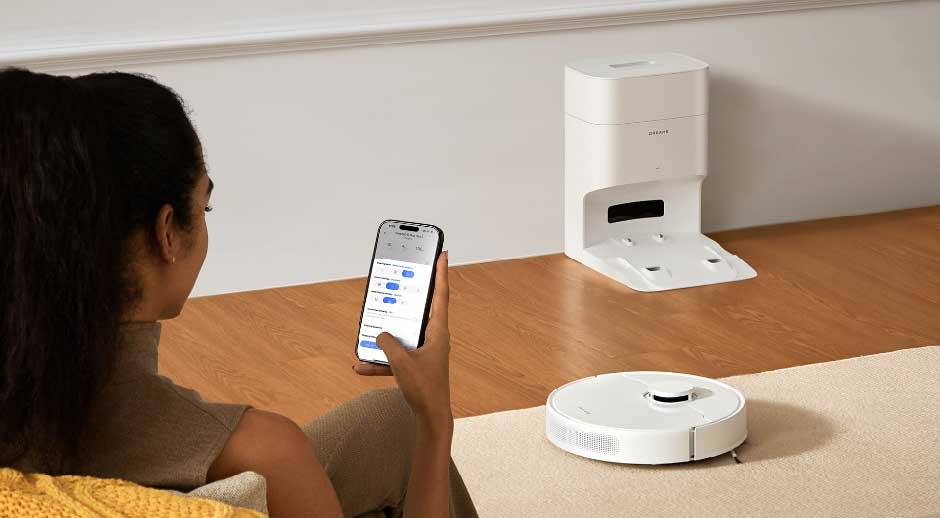
This is why the latest innovations focus on self-maintenance. We are seeing docking stations that do far more than charge. They empty the robot’s dustbin into a sealed bag, refill the robot’s water tank, and—crucially—wash and dry the mop pads with hot air to prevent bacterial growth and odors. Similarly, high-end wet-dry vacuums now feature one-touch self-cleaning cycles that flush the rollers and tubing with fresh water, ensuring the machine is pristine and ready for the next use without you ever touching a dirty part.
Conclusion
The evolution of automated hygiene means that a clean home is no longer the result of hard labor; it is the result of smart engineering. By integrating Lidar-guided robotics for daily maintenance and sensor-driven wet-dry vacuums for deep cleaning, homeowners can finally realize the promise of the smart home: technology that doesn’t just connect to the internet, but actively improves your quality of life.