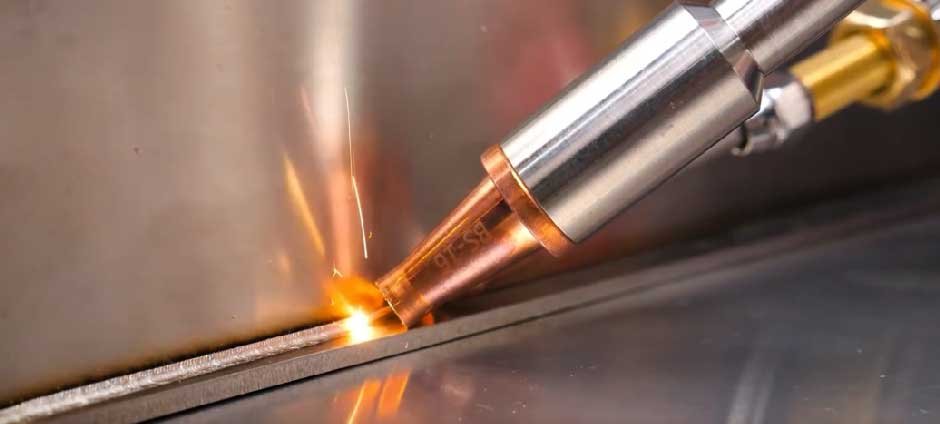
In today’s high-volume manufacturing world, speed and accuracy are more important than ever. Traditional methods of welding, while effective, are, however, struggling to meet the demand for joints that possess less waste material and are stronger and more efficient. Enter Fiber Lasers—a solution that harnesses light technology and cutting-edge control systems in a way that completely upends the way welding is performed.
With precision and speed that surpass all other technologies, Fiber Lasers can mark everything from delicate electronics to industrial-grade heavy equipment. In this article, we’re diving into how the revolutionary technology brings improved welding quality and increased productivity to modern fabrication.
The Power Behind Fiber Lasers
In fact, differently from traditional lasers, Fiber Lasers are provided by optical fibers doped with rare-earth material. This arrangement transmits the lightwaves through bendable fibers rather than fixed mirrors, which introduces less energy loss and lead to better beam quality. The result is a laser that not only has the power you need but with the stability and accuracy you demand. This sturdiness makes Fiber Lasers a perfect choice for welding projects where every millimeter counts. And they’re also cheap to run: Using less electricity and requiring fewer repairs than the competition.
Why Fiber Lasers Stand Out
The advantage is that Fiber Lasers can maintain a beam quality over distance because of their ability to focus and endow output to maximize efficiency with low loss levels. This guarantees even welds, including on irregular or bent surfaces. By virtue of their smaller spot diameter, they penetrate more deeply with a cleaner fusing and are particularly well-suited to applications processing thinner materials in industries such as automotive manufacturing, electronics, and aerospace.
XLaserlab and the progress of laser welding
In the realm of advanced welding systems, XLaserlab has become a byword for accuracy and output. The company will showcase its development of Laser Welder technology that is engineered to provide clean, repeatable, and efficient welds for virtually any material.
XLaserlab has incorporated Fiber Lasers and intuitive control systems, meaning operators who need to produce professional results with quick set-up time can do so in no time at all. Small workshop or large factory floor, the technology from XLaserlab provides a bridge between traditional craftsmanship and automation.”
The Effect of Fiber Lasers on Welding Speed
One of the main benefits Fiber Lasers offer when it comes to welding is speed. Their focused beam delivers power to the parts and melts/fuses metals more rapidly than conventional processes.
This fast heat transfer not only leads to process acceleration but also minimizes the risk of thermal damage to neighboring materials. A Laser Welder with fiber technology can boost your productivity considerably – without compromising on quality.
The Science Behind Faster Welding
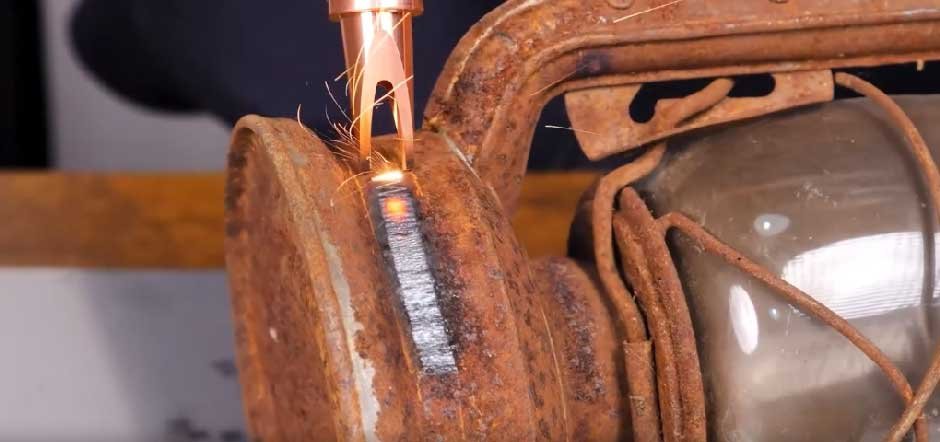
With a smaller, more focused beam, Fiber Lasers need less heat input (wattage) to make the weld by allowing full penetration. This translates into faster cooling of the materials, which means reduced work-in-process and distortion. Fine accuracy of the welding laser also minimizes the post-weld finishing process to increase time productivity in the production line.
Improving the Welding Quality using Fiber Lasers
Without quality, speed alone is of no good. Fortunately, Fiber Lasers perform on both aspects. Their steady production makes sure that they heat the weld area evenly, minimizing frequent cracking, progress, or porosity.
Cleaner and Stronger Welds
A Laser Welder has a narrow beam to assure greater fusion with less spatter. This leaves them with joints that look neater as well as being stronger in their structure. The welds also take less time to polish or rework, and therefore the end product is much durable and aesthetic.
The manufacturers that have changed to Fiber Lasers commonly complain of enhanced product consistency, increased energy efficiency, and lower rework costs, which is a clear indication that they have better standards.
Some of the Major advantages of Fiber Lasers in Welding
The following are the primary reasons why industries are quickly switching to Fiber Lasers in welding:
- Increased Speed: Accelerated delivery of beams saves time.
- High Quality: Accurate control of heat produces flaw-free welds.
- Energy Efficiency: Fiber systems consume less energy as compared to CO2or diode lasers.
- Low maintenance: The solid-state design ensures that they require fewer parts to service.
- Versatility: Applicable to metals such as steel, copper, aluminum, and titanium.
All these benefits lead to the formation of better welding outcomes as well as increased profitability for the businesses.
Fiber Lasers and Automation
Fiber Lasers and how they changed everything. Advancements in Fiber Lasers brought them to the production lines alongside modern automation. Robotic arms controlled by Computer Algorithms are used to make multiple welds, hundreds of times a minute, with surgical-like precision.
Such automated methods assure uniformity, which could not otherwise be controlled in large production runs, as human error is likely to cause differences. It’s also capable of continuous operation, making the Fiber Lasers a fundamental element in smart factories and Industry.
The Function of Intelligent Control Technology
Modern laser welders have incorporated monitoring sensors that can monitor temperatures, focus, us, and beam alignment in real time. These systems automatically change settings to enable precision control in order to ensure each weld meets a specific definition.
Why Fiber Lasers Are the Future of Welding
With industries in search of faster, cleaner, and more sustainable manufacturing options, Fiber Lasers are certainly paving the way. Their high speed, efficiency, and adaptability are still integral to today’s metalworking.
Also, fiber is the future of Laser Welding, so sot has a longer life than the previous generation machines for years of trouble-free operation. As laser control and energy continue to improve, the precision of welding shall become more accurate.
Conclusion
The development of Fiber Lasers has made us reimagine what is possible with welding. By addressing speed while also increasing quality, they have opened up new possibilities for industries that demand flawlessness in every joint. Whether in lightweight construction or the production of heavy machines, the fiber Laser Welders can develop their full potential for both strength and beauty.
With innovators such as XLaserlab, the relationship of light to metal is getting deeper. This combination of science and artistry proves to engineers that Fiber Lasers are much more than well-made tools—all signs point towards their future being that of precision welding.