
Maintenance determines how a boat performs five seasons from now, not just how it runs on launch day. Engines, hull structure, electrical systems, and trailers all age under load, especially in Australian conditions where salt, heat, and extended offshore runs accelerate wear. UV exposure, vibration over long distances, and repeated thermal cycling further contribute to gradual material fatigue.
Professional boat dealers operate on one clear principle: performance decline is gradual, predictable, and preventable but only when managed early and consistently. Maintenance is about controlling deterioration before it compromises reliability, safety, or resale value.
Here is how experienced dealers manage that responsibility properly.
- Scheduled Servicing and Preventive Maintenance
Service intervals are not administrative reminders. They are engineered thresholds based on load hours, environmental exposure, and mechanical tolerance.
Authorised boat dealers follow manufacturer schedules precisely, covering:
- Engine oil and filter replacement
- Gearcase inspection and fluid servicing
- Cooling system checks
- Steering and control inspection
- Battery and charging system testing
- Inspection of belts, hoses, and corrosion-prone fittings
In saltwater environments, corrosion begins immediately after shutdown. Salt residue attracts moisture even in storage, accelerating oxidation on exposed components. Missed servicing does not delay wear; it accelerates it. Over time, small lapses compound into measurable performance loss.
- Professional Diagnostics and Transparent Assessments
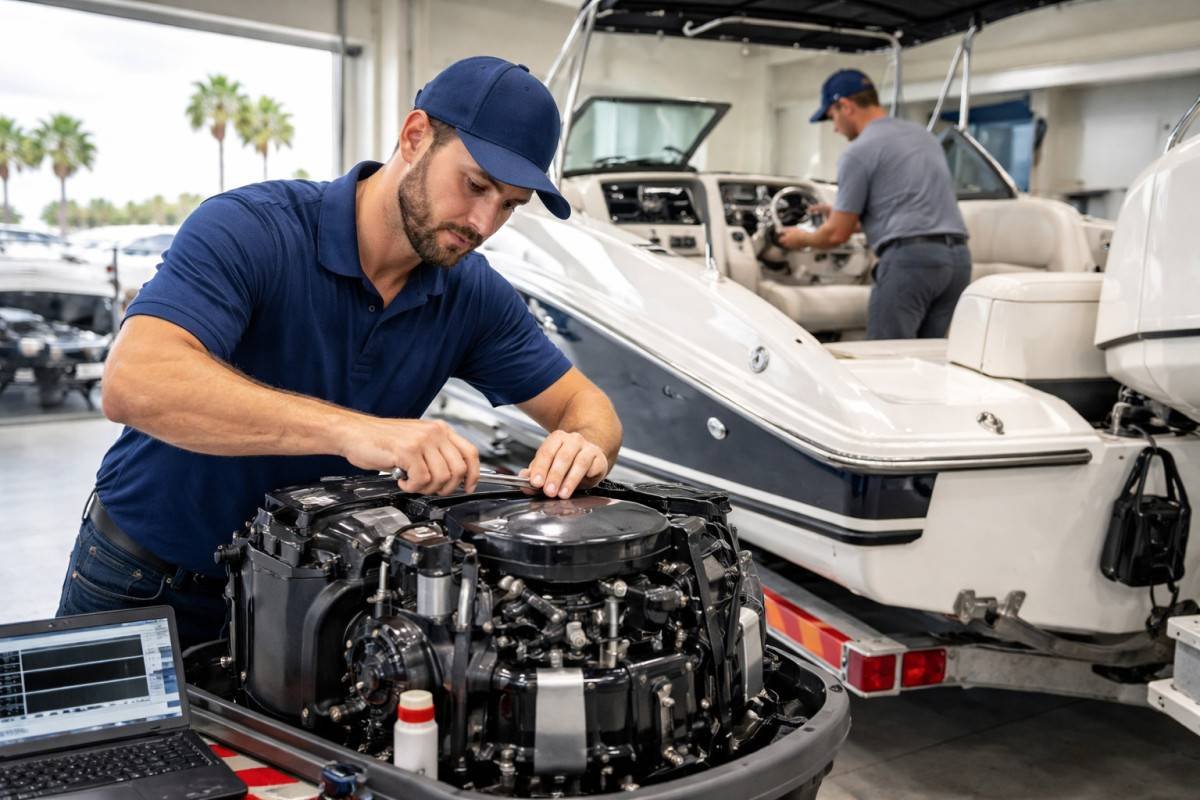
Modern marine engines generate performance data continuously. Dealers use manufacturer-backed diagnostic tools to read system codes, monitor engine behaviour, and identify irregularities before symptoms become obvious.
This allows early detection of:
- Fuel system inconsistencies
- Sensor calibration faults
- Cooling inefficiencies
- Charging instability
- Abnormal operating temperature trends
Mechanical failures offshore are rarely sudden. In most cases, warning signs existed earlier in recorded data. Structured diagnostics convert hidden information into preventative action, reducing the likelihood of avoidable breakdowns during extended runs.
- Qualified Technicians and Workshop Standards
Marine systems operate under constant vibration, torsional load, and environmental exposure. Small installation errors that seem insignificant at idle can escalate under sustained offshore conditions.
Experienced boat dealers employ certified marine technicians trained on specific engine platforms and hull configurations. They follow documented torque settings, sealing procedures, alignment standards, and manufacturer updates rather than improvising repairs.
Precision during installation directly affects longevity. Under load, inaccuracies do not stabilise; they amplify, often revealing themselves only after repeated stress cycles
- Genuine Parts and Warranty Management
Component tolerances matter in marine environments. Dealers prioritise genuine manufacturer-approved parts to maintain system compatibility and durability across integrated systems.
Aftermarket alternatives may reduce upfront cost, but differences in materials, corrosion resistance, internal coatings, or fit can affect:
- Fuel efficiency
- Electrical reliability
- Structural integrity
- Long-term wear patterns
- Manufacturer warranty compliance
Marine equipment functions as a coordinated system. Substituting components without specification alignment introduces variables that may not become evident until extended use under load.
Professional dealers prioritise consistency over short-term savings.
- Structural, Electrical, and System Repairs
Engine servicing addresses propulsion. Structural inspection protects safety and long-term integrity.
Experienced dealers routinely assess:
- Transoms and mounting points
- Stringers and internal supports
- Fibreglass layup or weld integrity
- Deck fittings and seals
- Through-hull fittings
- Signs of moisture ingress or stress cracking
Hairline fractures, minor seal failures, or stress points rarely improve with use. Under repeated offshore impact and hull flex, weaknesses expand incrementally until repair complexity increases significantly.
Structural issues develop quietly and progressively. Preventative inspection limits escalation and preserves hull strength over time.
- Water Testing and Quality Control
A repair is not complete until performance is verified under realistic conditions.
Reputable boat dealers conduct structured testing after significant work, including:
- Engine run-up verification
- Cooling system performance checks
- Electrical load testing
- Idle and throttle response calibration
- On-water performance validation, where necessary
Workshop performance does not always reflect offshore behaviour. Systems must operate correctly under sustained load, not just at idle or in controlled conditions. Load testing confirms stability when engines reach operating temperature and full output demands.
Testing ensures reliability in real-world operation.
- Ongoing Support and Owner Guidance
Structured servicing does not end at collection. Dealers provide guidance on seasonal intervals, corrosion management, and storage practices suited to Australian coastal exposure.
High-hour offshore operators require closer monitoring than occasional inshore users. Service planning should reflect usage intensity, not calendar dates alone.
Over time, familiarity with a vessel’s service history improves diagnostic precision. Patterns become visible. Preventative action becomes predictable. Breakdowns become less common.
Conclusion
Reliable boats are not maintained by accident. They are maintained through disciplined systems, consistent intervals, and informed decision-making.
Professional boat dealers manage complete mechanical ecosystems, including engine, structure, electrical, and safety, rather than isolated failures. In Australian conditions, where salt, distance, and shifting weather steadily test every component, neglected maintenance eventually reveals itself.
The vessels that continue running confidently season after season are not the ones repaired only when something stops working. They are the ones serviced methodically, long before offshore conditions begin asking difficult questions.