
Skip to the good bit
ToggleCustom merch used to require either significant budget or significant compromise. You ordered 50 shirts from a screen printer and hoped your audience wanted them. You sold out in a week or you moved them at a discount six months later. There wasn’t much middle ground between overcommitting and underdelivering.
That calculation looks different for creators working with ready-to-press DTF transfers today.
What Ready-to-Press Actually Means
A ready-to-press DTF transfer is a finished product you apply with a heat press. The printing, powder coating, and curing have already happened. What arrives is a design on film, ready to bond to fabric when heat and pressure are applied.
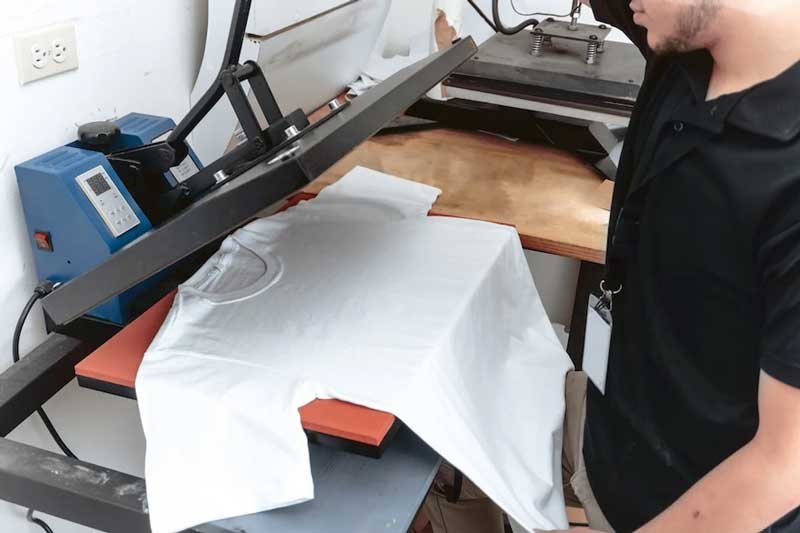
You don’t need a printer. You don’t need inks or film or curing equipment. You need a heat press — available new for $300-$600 — and a garment. Press for 10-15 seconds at around 300-320°F, peel the film, done.
The output is a full-color, flexible, wash-resistant print that survives 50+ wash cycles. On cotton, polyester, rayon, or blended fabrics. On dark garments without any pre-treatment.
For creators who make things for a living — or for fun — the barrier to producing custom wearables has dropped significantly.
The Use Cases in the Creative Community
Fan merch and tributes. Someone building a fan community around a game, show, or artist can produce custom shirts for events or meetups without committing to a minimum order. 12 shirts for a meetup of 12 people. Exactly what’s needed, nothing more.
Limited drops. An artist or illustrator can release a wearable version of their work in a limited run of 20 pieces. If it sells out, they produce more. If demand is lower, they haven’t over-produced. The economics work at any quantity.
Convention and event merch. Cosplayers, tabletop gamers, collectors — any community that gathers around events has need for custom wearables tied to specific moments. DTF makes small-run event merch practical.
Band and musician merch. Playing a show for 80 people and want merch at the table? You need 30-40 shirts, not 100. DTF lets you produce what actually makes sense for your audience size.
Pop-up shops and markets. Creators selling at weekend markets can produce seasonal or trend-responsive designs without the risk of large pre-production runs.
Ready-to-Press DTF Transfers in NJ
For creators in New Jersey, DTF Jersey offers ready-to-press DTF transfers in NJ with same-day shipping and no minimum orders. Their ready-to-press designs collection covers popular themes — seasonal, lifestyle, character-driven — that creators can use as stock artwork alongside custom uploads.
The no-minimum structure means you can order one transfer to test a placement before committing to a production run. You can order 5 for a pop-up table and 50 for a sold-out event. The same supplier, the same quality, the same turnaround.
Working with Custom Artwork
Creators working with original artwork need their files in the right format. Most DTF suppliers accept PNG files with a transparent background at 300 DPI or higher. The supplier handles the white underbase (needed for dark fabric printing) in production — you don’t need to add it yourself.
For creators who work in digital illustration, graphic design, or photo editing, the file preparation is minimal. Export a PNG from whatever you’re working in, upload it, specify the transfer size, order.
Complex designs — gradients, fine details, photographic elements — print the same way as simple ones. No per-color charge, no complexity penalty.
The Economics for Small-Scale Creators
Running the math: a transfer at $0.25-$0.50, a blank garment at $4-$8, and your time pressing (about 3-4 minutes per shirt) gives you a cost of goods around $5-$10 per finished piece.
A creator selling custom shirts at $25-$35 each is working with 60-70% gross margin on small runs. That math works at 10 units. It doesn’t require 100 to be viable.
For creators who’ve avoided custom merch because the minimum order commitment felt like too much financial risk, the DTF model removes that barrier. You don’t bet $500 on a design before you know if people want it. You produce what you need, when you need it, and scale based on actual response.
The Quality Question
The biggest concern most creators have about any transfer method is whether the output looks and feels premium or cheap. DTF addresses this.
Applied correctly, a DTF transfer has a soft hand feel that moves with the fabric. It doesn’t have the thick, plasticky texture of old-school iron-on transfers. The edges are clean. Colors are vibrant. The print survives regular washing.
For creator merch where quality reflects on your brand, the output is good enough to charge premium prices. Which is exactly where the math needs to work.





