
Skip to the good bit
ToggleDining out has never been just about the food. It’s about the flow of the experience, how quickly you’re seated, how easily you can order, and how smoothly everything arrives on the table. In recent years, technology has stepped in to close the gaps that once frustrated both customers and restaurant staff. And at the heart of this transformation are modern ordering systems for restaurants.
From sleek self-service kiosks to mobile ordering apps and staff-managed tablets, today’s restaurants have more ways than ever to take orders accurately and efficiently. But with more options also comes the question: Which ordering system actually makes the biggest difference?
Let’s break down the strengths, challenges, and best-use cases of kiosks, apps, and tablets so you can choose the right solution for your restaurant.
1. Self-Service Kiosks: The Power of Customer Autonomy
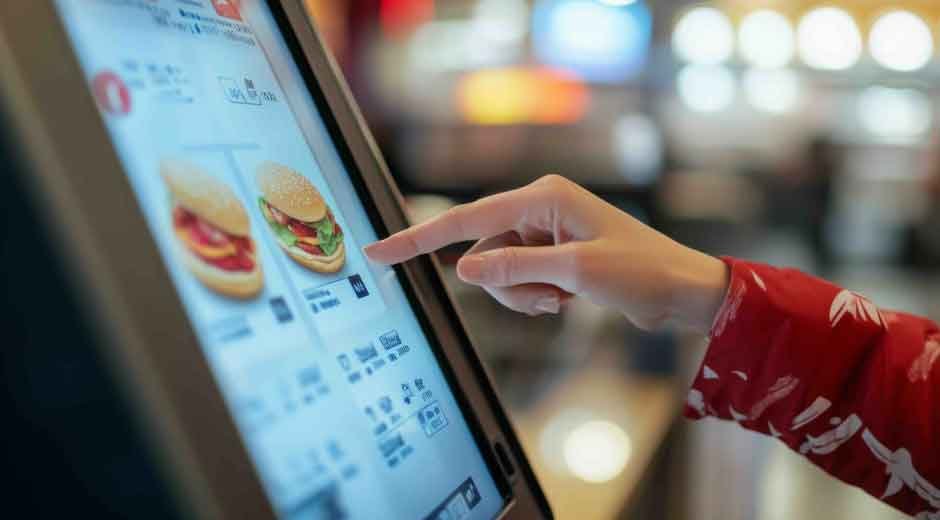
The self-service kiosk has become a defining feature of modern fast-casual dining. Walk into a busy food court or quick-service restaurant, and you’ll see customers tapping their way through menus, customising meals, and completing payment without ever joining a queue at the counter.
Why kiosks work incredibly well:
- They reduce queues
Multiple kiosks can process orders simultaneously, making the lunchtime rush far more manageable.
- They boost order value
Kiosks are pros at suggesting upgrades—fries, drinks, combos, desserts—without any awkwardness. Customers tend to explore more options when there’s no pressure.
- Accuracy improves
Customers input their preferences directly, reducing miscommunication and time spent correcting errors.
- They free up staff
With kiosks taking the bulk of orders, staff can focus on food quality, customer service, and managing the dining floor.
Best for:
- Fast food
- Cafés in high-traffic areas
- Food courts
- Quick-service restaurants
- Multi-branch chains
Kiosks are ideal when speed and volume matter.
2. Mobile Apps: Convenience Before Customers Arrive
App-based ordering has exploded thanks to online delivery, click-and-collect, and loyalty programs. Many diners now prefer placing their orders before they even arrive at the restaurant, skipping the queue entirely.
Why mobile apps are becoming essential:
- True convenience
Customers can browse menus on their phones anytime on the way to the restaurant, at work, or at home.
- Loyalty made effortless
Apps can store preferences, rewards, coupons, and past orders, encouraging regular visits.
- Better demand forecasting
Pre-orders help kitchens manage production, especially during peak hours.
- Direct customer communication
Push notifications let restaurants instantly promote specials, new dishes, and events.
Best for:
- Restaurants with takeaway or delivery
- Cafés with regular customers
- Chains want a unified brand experience
- Any venue targeting digital-first diners
Apps shine when customers want speed plus personalisation.
3. Staff Tablets: The Modern Twist on Table Service
While kiosks and apps enhance autonomy, tablets empower staff to deliver faster, smarter table service. Instead of writing orders down or walking between tables and POS terminals, servers can send orders directly from the table.
Why tablets make such a difference:
- Faster ordering
No need for staff to queue at the POS. Orders go straight to the kitchen.
- Better communication
Special instructions, modifiers, and dietary needs are clearly logged—no guesswork for chefs.
- Higher service quality
Servers can stay on the floor instead of rushing around. More presence, fewer delays.
- Real-time updates
Out-of-stock items can be flagged immediately to prevent disappointment.
Best for:
- Casual dining
- Full-service restaurants
- Bars and pubs
- Hotels and resorts
Tablets are perfect when hospitality and efficiency both matter.
How These Systems Compare
| Feature | Kiosks | Mobile Apps | Tablets |
| Customer autonomy | High | Very high | Medium |
| Upfront cost | Medium–High | Low–Medium | Medium |
| Best for | High volume | Repeat customers | Table service |
| Order accuracy | Very high | Very high | High |
| Queue reduction | Excellent | Excellent | Good |
| Personalisation | Moderate | High | High |
All systems have their purpose, and many restaurants use several offerings of two or more systems to cater to the needs of various customers.
Selecting the Right Ordering System for Your Restaurant
It has no general, one-size-fits-all answer; it depends on your venue’s style, the people you attract, and the operational issues you face.
Choose kiosks if you want:
- Faster in-store ordering
- Greater throughput at high times.
- Regular upselling without forcing the staff
Select mobile applications when required:
- Loyalty characteristics of customers are Strong
- More takeaway orders
- Prior to arrival, flexible ordering.
Select tablets in case you consider:
- Personalised table service
- Faster staff workflows
- Reducing order entry errors
Key Trends Driving Ordering System Adoption
- Labour Shortages
Digital ordering minimises front-of-house labour requirements, enabling restaurants to maintain high service levels with fewer teams.
- Emerging Contactless Preferences.
Contactless payments and very low-contact ordering are still affecting customer behaviour.
- Increasing Customer Expectations.
There is an expectation that restaurant ordering must be just as convenient as online shopping or ride-hailing apps.
- Data-Driven Insights
Digital ordering offers useful analytics, such as popular dishes, busiest periods, and customer behavioural patterns, which can be used to optimise menus and operations.
- Menu Transparency
Customisation tools, clear images, and allergy filters allow customers to make informed decisions.
Final Thoughts
Restaurants are no longer limited to one way of taking orders. Kiosks, mobile apps, and tablet-based POS systems each offer unique strengths, and together they represent the future of dining efficiency.
The real question isn’t which system is better?
Which combination best supports your restaurant’s vision?
By choosing the right ordering systems for restaurants, operators can streamline service, increase revenue, reduce staff pressure, and create a smoother, more satisfying experience for every diner.
Technology isn’t replacing hospitality, it’s enhancing it. And the restaurants that embrace these modern tools are the ones shaping the future of dining.