
Skip to the good bit
ToggleIntroduction
Healthcare is undergoing a quiet revolution — one powered not by new drugs, but by lines of code. When a clinician receives a CT scan or lab report today, behind the scenes could lurk a sophisticated programme that spots patterns faster, and sometimes more accurately, than a human eye. We’re talking about the rise of medical diagnostics AI (Artificial Intelligence) — that is, AI tools designed to interpret patient data, images, symptoms, and more, to assist or even lead in diagnosis.
What makes this moment special is the convergence of three forces: massive volumes of health data, improvements in machine learning and computing power, and pressure in healthcare systems to do more, faster, and cheaper. This means we must ask not only what these tools can do, but also how much does it cost to build an AI system for diagnostics, and whether the investment is worth it.
In this guest post, we’ll explore the trends, opportunities and practicalities of medical diagnostics AI, with real-world examples, actionable insights for healthcare leaders, and a thoughtful look at cost, risk and adoption. Whether you’re a provider, tech entrepreneur, or health executive, you’ll find something to take away.
Why Diagnostics is the Sweet Spot for AI in Healthcare
The challenge diagnostics face
Traditional diagnosis in medicine often battles:
- Human fatigue and error,
- huge volumes of imaging and lab data,
- Complex comorbidities that confuse decision-making,
- And geographic or resource constraints (especially in emerging markets).
For instance, research shows that early-stage cancer detection often produces both false positives and false negatives, with serious consequences.
How AI adds value
Enter algorithms that learn from huge datasets (imaging, pathology slides, EHRs) and spot subtle patterns. Benefits include:
- Quicker triage: AI flags urgent cases to clinicians, shortening time-to-treatment.
- Improved accuracy: e.g., a study showed AI interpretation of mammograms reduced false positives by 5.7% and false negatives by 9.4%.
- Scalability: once trained, the system can serve many clinics, including remote or underserved areas.
- Cost-savings: fewer repeat tests, fewer missed diagnoses, streamlined workflows.
Market momentum & adoption
The numbers back this up: the global AI in healthcare market is projected to reach roughly US$238.5 billion by 2032, having grown 233% from 2020 to 2023. In one survey, 66% of physicians in the U.S. reported using AI tools in 2024 (up from 38% in 2023).
Thus, perhaps more than other applications, diagnostics presents a compelling use-case for AI.
Top Real-World Examples of AI Transforming Diagnostics
Imaging & pathology
One clear domain is imaging: AI systems now assist in analyzing radiology scans, pathology slides, and more. For example, AI can interpret whole-slide digital pathology and identify cancer markers that humans might miss.
Early-detection and predictive tools
A recent study announced by the World Economic Forum described an AI model capable of predicting more than 1,000 diseases years before symptoms appear. That kind of foresight could shift healthcare from reactive to proactive.
Point-of-care & wearable integration
In cardiovascular care, for instance, some AI-enabled stethoscopes and single-lead ECG devices can detect valvular disease or heart failure with increasing accuracy.
Key Challenges and How to Navigate Them
Data quality, bias, and trust
AI is only as good as the data it’s trained on. Poor data, biased datasets or unrepresentative populations lead to risks of misdiagnosis or unequal care.
Actionable steps:
- Curate diverse datasets (age, gender, ethnicity)
- Implement explainability (so clinicians understand AI-decisions)
- Deploy pilot programmes and validate in real-world settings.
Integration with clinical workflow
An AI model that sits on a shelf is worthless. Integrating into workflows, aligning with EHR systems, and gaining clinician buy-in — these are non-trivial tasks.
Regulatory, accountability, and ethical issues
Who is responsible when an AI-driven diagnosis goes wrong? What happens in regions with weaker regulatory regimes? These questions remain open and demand thoughtful governance.
Cost vs ROI
Even with clear benefits, healthcare budgets are tight. Which leads us to the next major topic: how much does it cost to build an AI system — and how to ensure you get value.
Cost Considerations: How Much Does It Cost to Build an AI System?
Major cost components
When planning a diagnostics-oriented AI system, expect the following cost buckets:
- Data acquisition and curation: obtaining quality images, labels, and anonymisation.
- Model development: algorithm design, training, validation.
- Infrastructure: compute-power (GPUs/TPUs), storage, cloud, or on-premise.
- Integration & deployment: embedding into clinical software, user interfaces.
- Regulation & compliance: audits, certification, monitoring.
- Maintenance & updates: drift-handling, retraining, scalability.
Estimated cost ranges
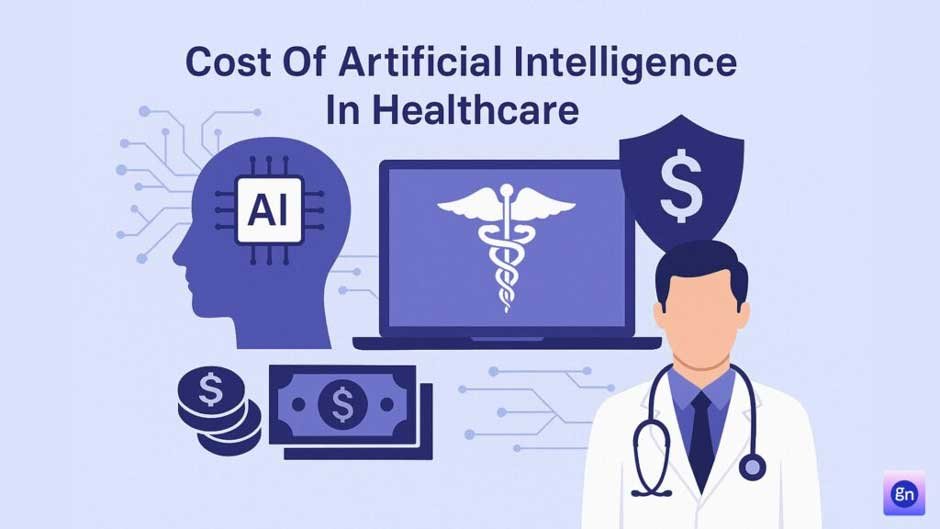
While every project differs, a rough ballpark: smaller pilot systems might cost hundreds of thousands of dollars; production-grade diagnostics platforms can run into millions. Asking how much does it cost to build an AI system is thus quite important for budget-setting and stakeholder alignment.
Let’s say you aim for an AI tool to read chest X-rays. You’ll need: acquiring maybe tens of thousands of annotated images (cost depending on region), training an architecture, validating in live settings, integrating with PACS/EHR, deploying, and supporting. That easily adds up.
Ensuring ROI & value proposition
To justify cost and risk:
- Define clear clinical outcome metrics (e.g., reduction of false negatives, time-to-diagnosis).
- Secure a pilot site to capture real-world impact and data.
- adopt a phased approach: proof-of-concept → validation → scale.
- Partner with clinicians from the outset (to reduce integration setbacks).
- Consider alternative funding models: grants, partnerships, shared-risk with provider organisations.
Strategic Implementation Guide for Diagnostics AI
Step 1 – Define the clinical problem
Start with a high-impact diagnostic bottleneck. For example: “In our hospital, 30% of mammograms get reviewed late” or “double readings cause delays”. Clearly articulate the problem, target population, and success metric.
Step 2 – Secure data & infrastructure
Collect good quality data, ensure the right legal/ethical frameworks, anonymise appropriately, and choose infrastructure (cloud vs on-premise,) mindful of HIPAA/GDPR/regional laws.
Step 3 – Develop and validate the model
Collaborate with data scientists and clinicians. During validation:
- Use hold-out test sets, ideally from different sites.
- Test relevant metrics (sensitivity, specificity, time-savings).
- Iterate based on clinician feedback and edge-case errors.
Step 4 – Deployment and workflow integration
Often underestimated: rollout must consider clinician UX, alert-fatigue, and false-positive burden. Training sessions and change management help adoption.
Step 5 – Monitor performance and update
Once live, track metrics continuously (e.g., diagnostic accuracy, clinician overrides, system uptime). Build feedback loops so the system improves.
Step 6 – Scale and iterate
After successful deployment in one unit or site, plan for scale (other imaging modalities, other sites, other languages). Cost savings and improved outcomes often drive the case for expansion.
Future Trends in Diagnostics AI
Multimodal data and precision diagnostics
Up ahead: systems that won’t rely solely on images, but combine imaging, genomics, wearables, and EHRs to deliver hyper-personalised diagnostics.
Edge-computing and decentralised diagnostics
With wearable sensors and mobile devices, diagnostic AI may move closer to patient homes, enabling remote screening in underserved areas.
Explainable AI and clinician-friendly models
Trust is key. Expect more models designed for interpretability (so clinicians can see why a decision was made) and for regulatory readiness.
Cost-efficient democratisation
The cost question — how much does it cost to build an AI system — will evolve as toolkits mature, open-source models proliferate, and partnerships across industry and academic domains expand. This may reduce the barrier for smaller hospitals or clinics to adopt diagnostic AI.
Practical Takeaways for Healthcare Leaders
- Start small: choose one diagnostic use-case with clear value and implement a pilot before biting off more.
- Engage clinicians early: alignment with workflow and buy-in are as important as algorithmic accuracy.
- Budget wisely: plan for the full lifecycle — data, build, deploy, maintain — and ask early “how much does it cost to build an AI system”.
- Measure outcomes: define success in clinical terms (e.g., fewer missed diagnoses, faster throughput) and tie into the business case.
- Build trust: communicate how the system works, monitor for biases, and maintain transparency with staff and patients.
- Keep the long view: diagnostics AI isn’t plug-and-play; it evolves and improves. Build a roadmap for scale and future-proofing.
Conclusion
The transformation of diagnostics through AI isn’t science fiction anymore — it’s happening in hospitals and labs around the world. From imaging to predictive tools, the rise of medical diagnostics AI offers a wave of opportunity: quicker diagnoses, better accuracy, wider access. But this opportunity comes with questions: what does it take to build such a system? How much does it cost to build an AI system that is robust, safe, and clinically useful?
By approaching this with a clear clinical problem, strong data foundations, clinician engagement and an eye on cost-to-value, healthcare organisations can make meaningful strides. The most successful ventures will be those that treat AI not as a “magic box” but as a well-integrated part of the care ecosystem — aligned with human expertise, workflow realities, and patient safety.
In short: AI may change how we diagnose, but it won’t replace the human touch. It will augment it. For those willing to invest wisely and build thoughtfully, diagnostics AI promises to deliver real returns — clinically and economically.
FAQs
- What is “medical diagnostics AI”?
It refers to AI systems designed to assist or conduct diagnosis in healthcare — interpreting images, lab data, patient records, or other inputs to identify disease, predict risk, or recommend next steps. - How much does it cost to build an AI system for diagnostics?
There’s no one-size answer — but expect investment across data acquisition, model development, infrastructure, integration and maintenance. In many cases, costs run into hundreds of thousands or even millions of dollars for full production systems. The key is planning for full lifecycle costs. - Are diagnostics AI tools ready for widespread clinical use?
Many tools show promising results and are in use today, but challenges remain around integration, regulation, bias, and clinician trust. Careful validation and phased deployment are advised. - What are the biggest pitfalls when deploying diagnostics-oriented AI?
Common pitfalls include poor data quality or bias, lack of clinician involvement, failure to integrate into workflow, underestimating cost and maintenance, and not monitoring performance post-deployment. Addressing these proactively improves chances of success.