Skip to the good bit
ToggleTraditional Japanese acupuncture is a gentle, calming approach that supports both your mind and body. Many people try it when stress, poor sleep, muscle tension, or emotional pressure start to build up. If you’re new to this style of treatment, it’s normal to feel unsure about what happens during a session. This guide explains the process in simple, patient‑friendly language.
Before your treatment: A calm, supportive start
Your session begins with a relaxed conversation. In traditional Japanese acupuncture, your practitioner looks at the whole picture including your emotional wellbeing, sleep quality, energy levels, and areas of tension.
Stress often comes from long work hours, irregular routines, or disrupted sleep. Because these issues affect both body and mind, your Japanese acupuncturist takes time to understand all aspects of your health. Sessions take place in a quiet, peaceful environment, helping you feel settled before treatment begins.
How Japanese acupuncture works
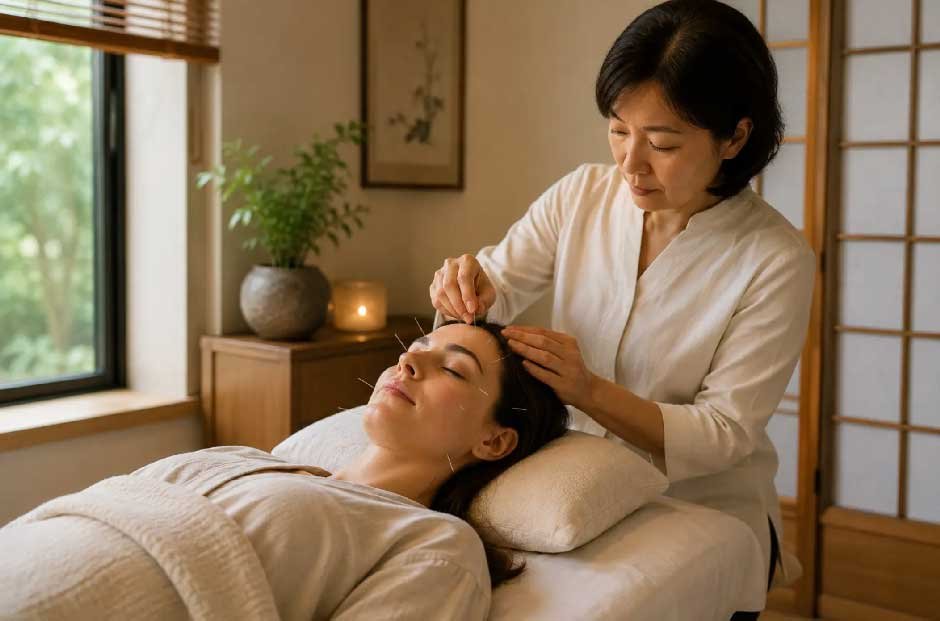
Traditional Japanese acupuncture uses very fine needles and a gentle, minimally invasive technique. The goal is to calm your nervous system, improve circulation, and help your body shift out of “fight or flight” mode.
During the session, needles are placed at specific acupoints linked to relaxation and balance. Many people notice their muscles soften and their mind become quieter. Treatments may also include reflexology or acupressure to deepen relaxation.
Why relaxation matters
Relaxation is a key part of recovery. When your body stays under pressure for too long, digestion, sleep, concentration, and emotional balance can all be affected.
Traditional Japanese acupuncture helps guide your body into a parasympathetic (rest‑and‑restore) state. This gives your system the space it needs to recover naturally. Many people with busy schedules or long‑term stress benefit from weekly sessions, which support steady, gradual improvement.
Improvements you may notice over time
With regular sessions, people often report:
- Better sleep
- Improved digestion
- Reduced headaches
- More emotional balance
- Less muscle tension
- Better concentration
Some feel changes quickly, while others notice improvements gradually over several sessions. Traditional Japanese acupuncture focuses on long‑term wellbeing rather than quick, surface‑level fixes.
Conclusion
It’s completely normal to feel unsure before your first appointment. Understanding how traditional Japanese acupuncture works can make the experience feel much more approachable. With gentle techniques, a calming environment, and a focus on whole‑body balance, this style of acupuncture supports gradual recovery, reduced stress, and improved emotional wellbeing over time.