
Skip to the good bit
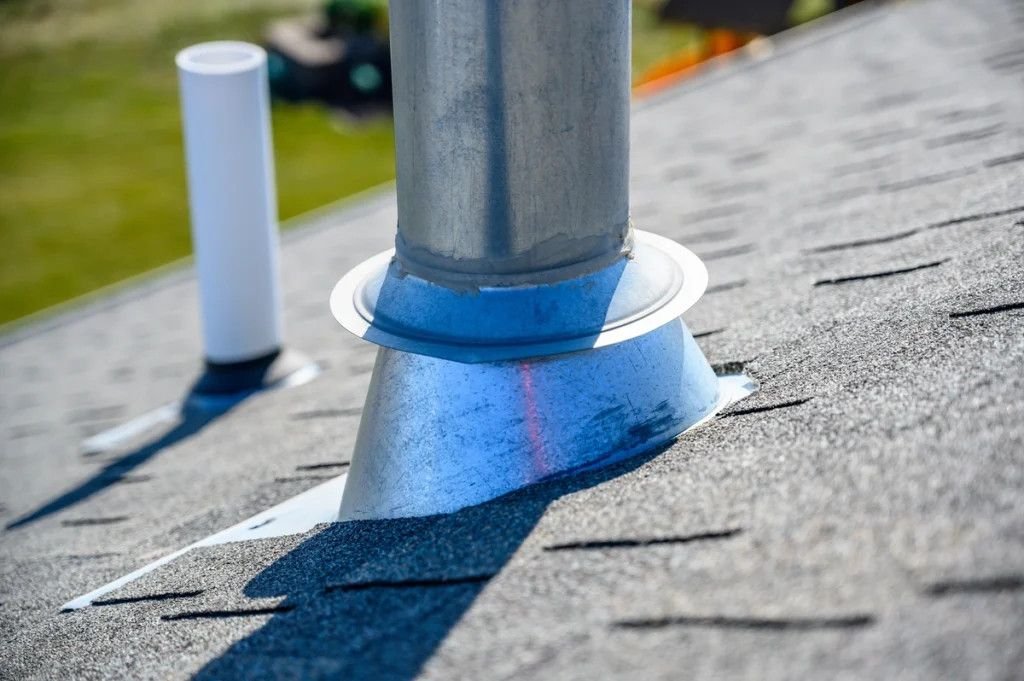
ToggleA roof boot (also called a pipe boot, vent boot, or plumbing vent flashing) is a flexible rubber or silicone seal that fits around a pipe where it passes through the roof, with a metal or plastic base that integrates into the shingle layers. The boot’s flexible collar grips the pipe tightly while the flat base sits under the shingles on the uphill side and on top of the shingles on the downhill side, creating a waterproof transition around the penetration.
Every pipe that sticks through your roof — the plumbing vent stack, the furnace exhaust, the water heater flue, the bathroom fan vent, the kitchen range hood — has a roof boot around it. If the boot fails, water follows the pipe straight down into the attic or the wall cavity. The ceiling stain that appears directly below a bathroom or near the furnace closet is almost always a failed roof boot, and replacing one boot costs $250 to $500. Ignoring the stain until the drywall collapses costs $800 to $1,500.
What Pipes on Your Roof Have Boots Around Them
Walk around your house and look at the roof. Every vertical pipe penetrating the roof surface should have a boot at its base. The most common pipes with roof boots include:
- Plumbing vent stacks. These are 2 to 4 inch diameter pipes, usually black ABS or white PVC, that allow sewer gases to vent above the roofline and admit air so drains flow properly. Every house with indoor plumbing has at least one, and most have two to four. The boot on a plumbing vent is the most common roof boot failure point because plumbing vents are not hot — the rubber degrades purely from UV exposure, not heat.
- Furnace or boiler exhaust flues. Metal flue pipes — typically 4 to 6 inches in diameter — require a high-temperature boot made of silicone or metal because standard neoprene boots cannot withstand the exhaust heat. A standard rubber boot installed on a furnace flue will melt, crack, and leak within the first heating season.
- Water heater flues. Same heat concern as the furnace. Gas and oil water heaters vent through the roof via a metal flue pipe that requires a high-temperature boot.
- Bathroom fan and kitchen range hood vents. These are usually 4-inch round ducts with a cap on the exterior. The duct passes through a roof boot where it penetrates the roof deck. These boots are small, inexpensive, and often overlooked during roof replacements.
- Attic ventilation pipes and radon mitigation pipes. Any pipe that penetrates the roof deck needs a boot, including passive attic vents that use pipes rather than box vents or ridge vents.
Roof Boot Materials: Rubber, Silicone, and Metal
The material the boot is made of determines how long it lasts. Not all boots are created equal, and a $15 neoprene boot installed during a roof replacement will crack and leak 10 to 15 years before the shingles wear out — meaning the homeowner pays for a $400 boot replacement on a roof that otherwise has 10 years of life left.
| Boot Material | Typical Lifespan | Cost (Material Only) | Best For | Failure Mode |
| Neoprene (Rubber) | 10-15 years | $10-$25 | Budget roof replacements | UV cracking, splitting at the collar |
| EPDM Rubber | 15-20 years | $15-$35 | Standard plumbing vents | Slow UV degradation, collar loses elasticity |
| Silicone | 25-40 years | $25-$60 | Premium, hot pipes, all climates | Rare — can tear if pipe shifts |
| Metal (Lead or Aluminum) Jack | 30-50 years | $20-$50 | Furnace/water heater flues | Corrosion at base, seam separation |
| All-Metal (Steel or Copper) | 40-70 years | $40-$120 | High-temp, premium, historic | Corrosion if not compatible metal |
The difference between a neoprene boot and a silicone boot is roughly $30 in material cost — and roughly 20 years of additional service life. When a roofing contractor installs a new roof and asks whether you want standard boots or upgraded silicone boots, the correct answer is silicone. The $200 to $400 upgrade for all the boots on the roof is less than the cost of replacing one failed neoprene boot at year 12, plus the interior drywall repair from the leak it caused.
The furnace flue rule: Never install a rubber or neoprene boot on a furnace or water heater flue. The exhaust gas temperature at the roof penetration can reach 400°F to 500°F. Neoprene degrades above 200°F. A silicone or metal high-temperature boot is required by code for any pipe that carries combustion exhaust.
How Roof Boots Fail: Why a $15 Rubber Part Causes a $1,500 Ceiling Repair
Roof boot failure is the single most common cause of ceiling leaks in homes with asphalt shingle roofs under 20 years old. The shingles are still shedding water, the flashing is intact, the valleys are clear — but one boot collar has cracked, and water is running down the outside of a plumbing vent into the attic.
The failure follows a predictable timeline. The rubber collar on a neoprene or EPDM boot is exposed to direct sunlight on the roof. UV radiation breaks down the polymer chains in the rubber over 10 to 15 years, causing the collar to lose flexibility and develop hairline cracks at the point where it grips the pipe. The cracks widen with thermal cycling — the collar expands on hot summer days and contracts on cold winter nights — until one crack opens wide enough for rainwater to seep through. The water runs down the outside of the pipe, drips onto the attic insulation, and soaks through the drywall ceiling below.
Squirrels and raccoons occasionally accelerate the failure by chewing on the rubber collar. A chewed boot collar looks ragged around the top edge rather than smoothly cracked. The fix is the same — replacement — but a metal sleeve over the new boot’s collar prevents the next animal from doing the same damage.
Roof Boot Replacement: How It Is Done and What It Costs
Replacing a roof boot is one of the simpler roof repairs — a roofer can do it in 30 to 60 minutes for most single-pipe penetrations. The process involves lifting the shingles around the boot, removing the old boot, sliding the new boot’s base under the uphill shingles and over the downhill shingles, sealing the collar to the pipe with a stainless steel hose clamp, and nailing the base flange to the roof deck. The nails are covered by the shingles when they are laid back down, so no fastener is exposed to the weather.
The cost to replace a single roof boot is $250 to $500, including the boot itself ($15 to $60), one hour of labor ($80 to $120), and the minimum service call charge that most roofing contractors apply. Replacing multiple boots during the same visit costs $150 to $250 per additional boot because the minimum service charge is already covered, and the roofer is already on the roof with the tools out.
If the leak from a failed boot has rotted the roof decking around the penetration, the repair expands. The roofer cuts out the damaged section of plywood, replaces it, installs new ice and water shield around the penetration, and then installs the new boot. The cost for a boot replacement with decking repair is $400 to $900, depending on the size of the rotted section.
FAQ: Common Questions About Roof Boots
How do I know if my roof boot is leaking?
Check the ceiling directly below any plumbing vent — typically in a bathroom, near the kitchen sink, or in the utility closet. A water stain in that location that gets worse after rain is almost certainly a roof boot leak. In the attic, look for a dark, wet ring of insulation around the pipe where it passes through the roof deck. The pipe itself may have a water streak running down its side from the boot collar.
Should roof boots be replaced every time the roof is replaced?
Yes. The marginal cost of replacing all roof boots during a full roof replacement is $200 to $400 in materials, and the new boots will last as long as the new shingles. Reusing the existing boots on a new roof means paying for a $400 boot replacement service call 10 years from now when the old boot fails — or worse, paying for a ceiling repair when the boot fails and nobody notices until the drywall is wet.
Can I replace a roof boot myself?
A homeowner who is comfortable on a ladder and has a flat bar, a hammer, a utility knife, and roofing nails can replace a roof boot. The process is straightforward and well-documented in manufacturer instructions. The risk is not the boot installation but the ladder and the roof pitch. A wet roof, a steep pitch, or a two-story fall are risks that cost more than the $250 to $500 you save by doing it yourself.
My old house has lead pipe boots. Should I replace them?
Lead pipe boots — also called lead pipe jacks or lead flashings — were common on homes built before 1980. Lead is durable (50+ year lifespan) and does not need to be replaced unless it is torn, corroded through, or the roof is being replaced. However, lead is toxic, and handling lead flashing without proper protective equipment (gloves, respirator) is a health risk. If you have lead boots and the roof is being replaced, have the contractor replace them with modern silicone or metal boots and dispose of the lead properly.
A Roof Boot Is the Cheapest Part of the Roof — and the Most Common Leak Source
The $15 rubber collar around a plumbing vent is the weakest link in the entire roof waterproofing system. The shingles last 25 to 30 years. The step flashing lasts 30 to 50 years. The valley flashing lasts 30 to 50 years. The neoprene roof boot lasts 10 to 15 — half the life of the shingles, and the one part of the roof that the homeowner never looks at.
When you replace your roof, pay the extra $200 to $400 for silicone boots on every penetration. When you see a water stain on the ceiling below a bathroom, check the boot before you check anything else. And when the roofer is on the roof for any reason, ask them to inspect the boot collars. The inspection takes 60 seconds per pipe. The repair that is avoided by replacing a cracked boot before it leaks costs nothing.