
Skip to the good bit
ToggleThe construction industry is at a turning point due to an unprecedented labor shortage. With 92% of construction firms reporting issues hiring qualified workers in a recent Associated General Contractors survey, there is an urgent call for innovative workforce solutions. This shortage adversely affects project timelines and overall industry growth, creating a critical need for adaptive strategies that can both attract and retain talent. To learn more about construction workforce development opportunities in your area, click here.
Forward-thinking organizations and government bodies are reimagining how skilled workers are developed, blending new technologies, educational collaborations, and inclusivity initiatives. These efforts aim to build a robust and future-ready workforce capable of meeting the construction sector’s evolving demands.
Government Initiatives and Investments
State and local governments are actively responding to the workforce shortage with dedicated training programs and investments. In Pennsylvania, the Construct PA program is a pioneering initiative offering certifications and hands-on training to young adults seeking construction careers. The program’s focus on practical skills and recognized certifications paves the way for a sustainable skilled labor pipeline. Similarly, New York’s Empire State Development allocated over $15 million to workforce projects, benefiting more than 5,700 residents with specialized training in high-demand sectors such as construction.
These investments reflect a nationwide recognition that long-term industry health relies on grassroots workforce development. As reported by The New York Times, play a pivotal role in providing funding and direction for programs tailored to the precise needs of the construction market.
In addition to training, states have started to create mentorship and career exploration programs for middle and high school students. These efforts introduce young people to construction career opportunities earlier, allowing them to develop skills and interests before they enter postsecondary education. Scholarship and pre-apprenticeship programs targeting veterans and career changers are also on the rise, as agencies look to widen the pipeline to overlooked populations. Government grants often support these initiatives, increasing access for individuals from low-income or historically underrepresented backgrounds.
Technological Advancements in Training
Technology is transforming construction workforce training and increasing its effectiveness. For example, the North America’s Building Trades Unions (NABTU) collaboration with Microsoft has brought artificial intelligence training into apprenticeship programs. This partnership ensures workers receive essential digital skills that are critical on today’s tech-enabled construction sites, preparing them for both present and emerging industry requirements.
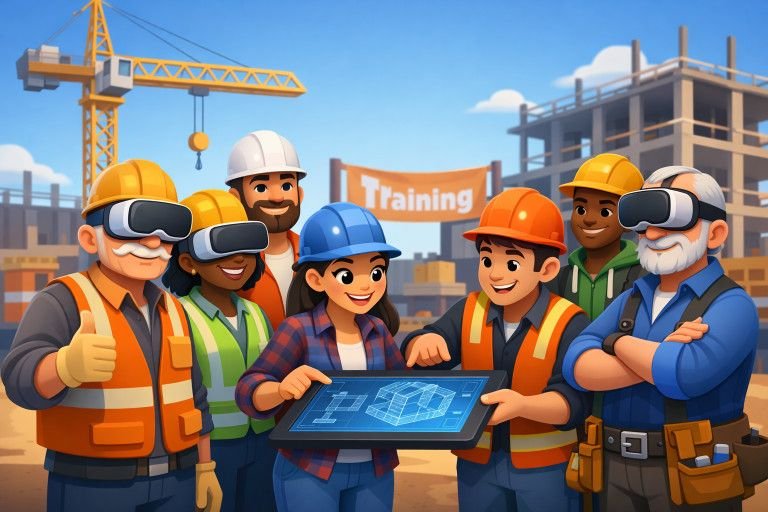
Simulation training platforms are also gaining popularity for their ability to replicate real-life scenarios in a safe, educational environment. By practicing skills such as machinery operation or site navigation in simulated environments, workers can improve performance and safety outcomes before transitioning to real-world construction sites. This approach reduces both injuries and costly errors.
Beyond AI and VR, digital platforms also facilitate ongoing remote learning and micro-credentialing, making it easier for both trainees and existing employees to upgrade specific skills as technology or codes change. Mobile apps and cloud-based project management tools are enabling field workers to access blueprints, safety protocols, and progress tracking instantly, increasing productivity on-site.
The adoption of Building Information Modeling (BIM) has further reinvented training and project execution. Workers trained on BIM are able to collaborate more effectively with architects, suppliers, and project managers, leading to fewer errors and delays. Integrating BIM into workforce development signifies a commitment to future-proofing talent as the industry grows more complex.
Collaborations Between Education and Industry
Successful workforce development depends on active collaboration between educators and industry leaders. Laing O’Rourke’s partnership with Barnsley College in the United Kingdom is an outstanding example. Together, they built the nation’s first modern methods of construction training facility focused on offsite manufacturing techniques, which have become increasingly important for efficiency and quality control in today’s construction projects. More information about this facility can be found on.
Stateside, community colleges and trade schools are forming alliances with construction companies to provide targeted curricula, internships, and real-time exposure to workplace expectations. These partnerships bridge the gap between academic theory and practical application, ensuring that new graduates are genuinely job-ready upon entering the workforce.
In addition to training students, these collaborations often invite seasoned industry professionals to participate in curriculum development, guest lectures, and mentorship programs, thus ensuring curricular relevance and fostering a culture of continuous improvement. Dual-enrollment and apprenticeship programs are helping high school students earn industry-recognized credentials, giving them a competitive edge and further shortening the path to employment.
Addressing Diversity and Inclusion
The drive to address labor shortages has led the industry to prioritize diversity and inclusion initiatives. By introducing assistive technologies such as wearable exoskeletons, construction sites are increasingly accessible to women and individuals with disabilities. Research shows that these technologies minimize physical strain, making construction roles viable for a broader range of individuals and expanding the available labor pool.
Promoting inclusivity not only addresses workforce gaps but also supports a more equitable and dynamic industry culture. Greater workforce diversity can drive creativity, improve problem-solving, and reflect the diverse communities construction projects serve. These benefits help sustain long-term growth and stability for the industry.
Organizations are investing in targeted outreach and marketing campaigns to attract women, people of color, and veterans to construction careers. Some firms are updating recruitment practices, emphasizing nontraditional career pathways and offering flexible work arrangements to foster a welcoming environment. Companies are also establishing internal resource groups and mentorship programs, ensuring that new hires have ongoing support and opportunities for career advancement.
Conclusion
The construction industry’s labor shortage is a complex challenge that demands a multifaceted response. Government investments, technology-focused training, educational partnerships, and strong inclusion policies are collectively shaping a new era for workforce development. By continuing to invest in these innovative strategies, the industry is poised to develop a skilled, diverse, and future-ready labor force capable of meeting the infrastructure needs of tomorrow’s world.
Looking ahead, ongoing success will depend on the ability of industry stakeholders to anticipate future needs and continually adapt their approaches. Close monitoring of workforce trends, ongoing research, and open lines of communication between employers, educators, and policymakers will be crucial. By actively promoting construction as a dynamic and rewarding career choice, and by dismantling traditional barriers, the industry can secure a robust pipeline of talent prepared for emerging challenges and opportunities.