
There’s a specific kind of fatigue that sets in after reading too many AI think-pieces. Everything is transformative. Everything is paradigm-shifting. Every tool is going to change the way you work forever.
So let me try a different framing: Claude agents are genuinely useful because they are exceptionally good at tasks that are dull, repetitive, and easy to procrastinate on. That’s it. That’s the pitch.
If that sounds underwhelming, keep reading — because in practice, that particular category of work is where a surprising amount of real time goes.

The Problem With Interesting Work
Here’s something that took too long to notice: the work that gets done first isn’t always the most important work. It’s the most interesting work. The stuff that feels like progress.
The boring tasks — following up on that email thread from two weeks ago, compiling notes from five different sources into one coherent document, sorting through a backlog of messages to figure out which ones actually need a response — those are the tasks that pile up. They’re not hard. They’re just nobody’s priority until they become someone’s problem.
This is where an agent-based workflow starts to make sense in a way that a regular chatbot doesn’t. A chatbot answers questions. An agent handles tasks — including the ones you keep putting off.
What Running an Agent Actually Looks Like
The mental model most people bring to AI agents comes from science fiction: autonomous systems making independent decisions, executing complex plans with no human oversight. The reality is considerably less cinematic, and considerably more useful.
Running a Claude agent on a practical workflow looks more like briefing a very capable assistant than commanding a robot. You define the task, set the guardrails, and let it run. The agent works through the steps — gathering information, drafting outputs, flagging anything unclear — and surfaces results for review before anything consequential happens.
The key word is review. Nothing goes out, gets filed, or gets acted on without a human sign-off. That’s not a limitation baked in reluctantly; it’s the part that makes the whole system trustworthy enough to actually use.
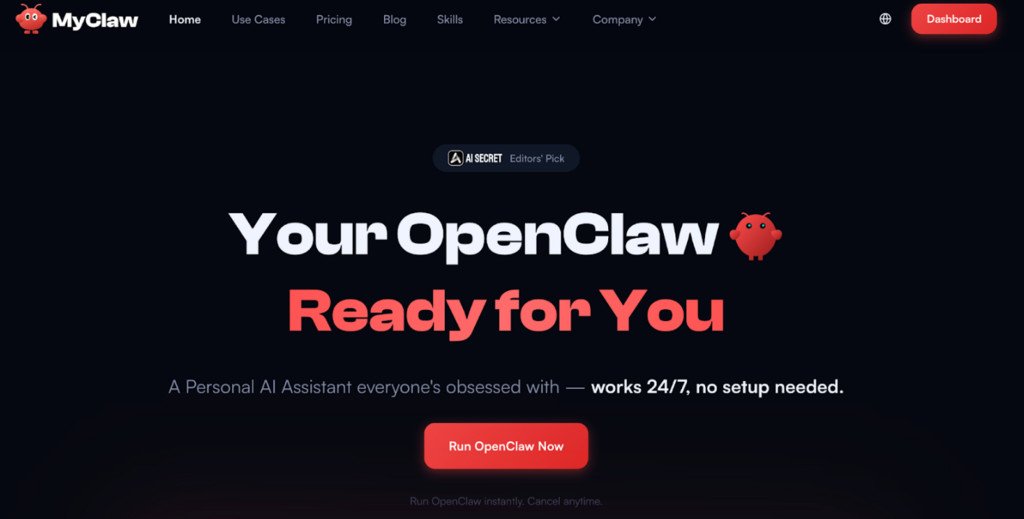
After some trial and error with different setups, the workflow that stuck came through MyClaw AI, which strips out a lot of the configuration overhead that usually comes with deploying agents. The difference between having to engineer a pipeline from scratch and having a working setup in an afternoon is the difference between a project that happens and one that stays on a to-do list.
The Slack Problem (And One Way to Solve It)
If there’s a single place where the gap between “AI assistant” and “AI agent” becomes visceral, it’s Slack.
Slack is where everything goes when it needs to get done — and then sometimes where it goes to quietly die. Threads branch, conversations lose momentum, requests get buried under newer noise. Keeping up with it isn’t a skills problem; it’s a volume problem. There are only so many times a person can re-read the same thread to reconstruct context before it stops feeling like work and starts feeling like punishment.
The Slack Skill addresses this in a specific, practical way: the agent can track threads, draft replies, surface things that have stalled, and pull together context from across a workspace without the human having to manually dig through everything. What changes isn’t the number of messages — it’s the amount of time spent managing the state of those messages in your head.
One workflow that has become almost automatic: at the start of the day, the agent surfaces anything that has gone quiet for more than 48 hours and drafts a quick status check or follow-up for each. Takes about five minutes to review and approve. Before, that same task happened irregularly — when someone sent a frustrated message asking for an update.
Small workflow. Meaningful difference.
Where the Frustration Usually Comes From
Agents fail in predictable ways, and most of them trace back to the same root cause: the input was underspecified.
Telling an agent “research competitors and write a summary” produces mediocre results. Telling it “look at these five companies, focus on their pricing pages and any recent product announcements from the last 90 days, and summarize in three bullet points per company” produces something usable on the first pass.
This sounds obvious, but it’s a habit shift. Most people are used to search engines and chatbots that tolerate vagueness. Agents tolerate vagueness less well — not because they’re dumber, but because they’re actually trying to do something, and ambiguity compounds across steps.
The upside is that the habit of specifying tasks clearly also makes the tasks themselves better. Forcing a crisp definition of what “done” looks like before delegation is often where the real value comes from, before the agent even runs.
The Tasks That Didn’t Make It
Honest accounting requires noting what didn’t work.
Creative judgment calls — choosing a strategic direction, writing something that needs a specific voice or relationship context, making a call where the right answer isn’t derivable from the available information — these still need a person. The agent can support those decisions with well-organized information and draft options, but the actual call needs human ownership.
Also: anything that requires real-time back-and-forth with nuance. Negotiations, sensitive conversations, situations where reading the room matters. Agents are good at asynchronous, structured tasks. They’re not a replacement for presence.
Being clear-eyed about this prevents the failure mode where someone over-delegates, gets a mediocre result, and concludes that agents don’t work. They work on a specific class of problems. That class is large — larger than it might seem — but it’s not everything.
Three Months In, What’s Actually Different
The change that snuck up gradually: the mental overhead of tracking tasks that were pending dropped significantly. There’s a specific low-grade stress that comes from carrying around a list of things that need to happen but haven’t — follow-ups, summaries, routine research. When those get reliably handled by a system that actually follows through, that cognitive load lifts in a way that’s hard to quantify but easy to notice.
The other shift is in where attention goes. When the tedious work is handled, the hours that remain skew more toward decisions and conversations — the parts that actually require a person. That reallocation doesn’t require heroic productivity habits. It just requires routing the right tasks to the right place.
Claude agents, in practice, are that routing mechanism. Not magic. Not science fiction. Just a reliable way to handle the work that keeps piling up on the side of the desk.