Skip to the good bit
ToggleAustralia offers some of the most breathtaking and remote off-grid touring destinations in the entire world. From the dusty red tracks of the Simpson Desert to the rugged, sweeping coastlines of Western Australia, heading off the beaten path is a rite of passage for many four-wheel drive owners. However, a standard factory vehicle is rarely equipped to handle weeks away from civilization without some significant modifications. Upgrading your storage setup is absolutely vital to carry enough supplies, recovery gear, and spare parts safely over long distances. Before investing in major storage modifications like a new aluminium canopy or custom drawers, ensure your base vehicle is mechanically sound by following basic affordable auto repair and maintenance tips. A reliable foundation is the most important part of any outback build, ensuring you can return home safely.
Foundation First: Surviving the Corrugations
The outback environment is notoriously unforgiving on automotive components. Endless kilometres of deep corrugations, bulldust holes, and rocky terrain place immense stress on every part of your four-wheel drive. Upgraded storage solutions add significant weight, which dramatically changes how your vehicle handles these rough conditions. Everything bolted to your chassis must be engineered to survive constant, punishing vibration.
According to remote travel experts, when travelling through remote areas, securing your load is as critical as adjusting your tyre pressure and conducting daily safety checks to withstand harsh outback corrugations. Lowering tyre pressure increases the contact footprint and helps absorb the shock of rough tracks. This practice protects your suspension, your tyres, and the expensive storage equipment bolted to your tray from shaking apart. Furthermore, routine inspections of your suspension bushes and shock absorbers will help identify early signs of wear caused by heavy, vibrating loads before they result in a complete failure on the trail.
Managing Crucial Fuel and Water Reserves
One of the biggest logistical challenges of extended off-grid touring is fuel and water management. Roadhouses in regional Australia can be hundreds of kilometres apart, and carrying reliable backup reserves is simply non-negotiable for remote travel. Storing spare fuel inside the cabin or loosely in the back of a ute is extremely dangerous due to the high risk of toxic fumes, leaks, and unpredictable movement during transit. Keeping these heavy, sloshing liquids firmly attached to the outside of your setup is always the safest approach.
Installing a heavy-duty Jerry Can Holder provides a rigid, rattle-free mounting point on your rear bar or canopy side wall. This straightforward upgrade keeps hazardous liquids safely outside the passenger area while remaining easily accessible when you need to top up the fuel tank on a lonely stretch of dirt road. Ensuring these holders are lockable also protects your valuable fuel reserves from theft when parked in regional towns overnight.
Structuring Your Off-Road Storage Setup
Once your essential fuel and water reserves are sorted, you need a cohesive system to organise food, recovery gear, and camping equipment. A messy vehicle inevitably leads to lost gear, damaged supplies, and a frustrating camp setup experience after a long day of driving. To maximise efficiency, consider breaking your storage down into distinct, easily accessible zones.
Here are the most effective upgrades for keeping your touring gear organised and safe:
- Heavy-Duty Canopies: A sealed aluminium canopy offers the ultimate protection against fine bulldust and extreme weather. It provides a secure, lockable shell to house your camping fridge, dual battery system, and sliding pantry.
- Modular Drawer Systems: Sliding drawers keep heavy items like tools, air compressors, and tinned food low in the vehicle. This improves your centre of gravity while ensuring you never have to unpack the entire car just to find a single spanner.
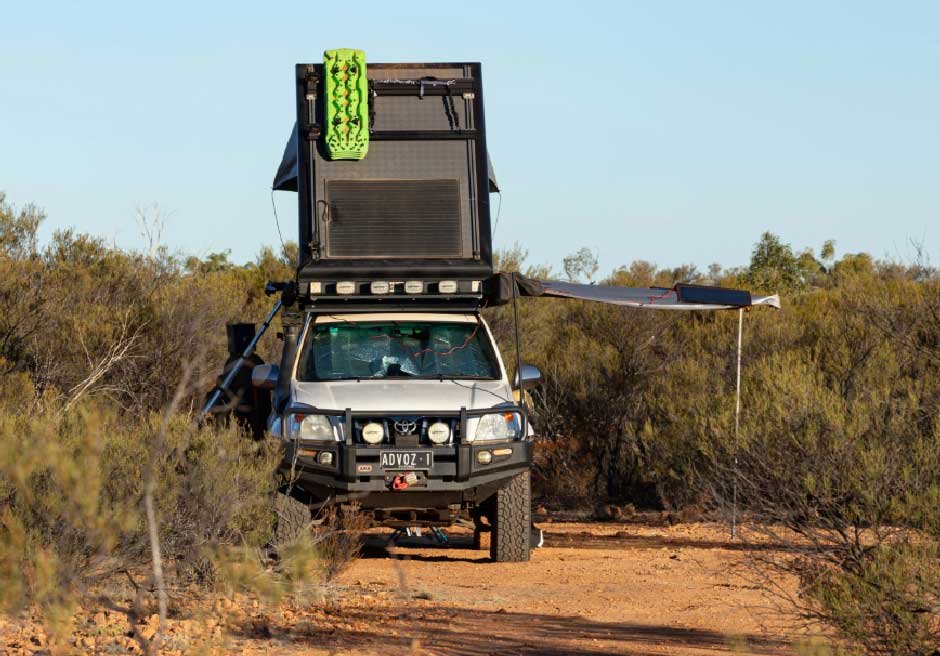
- Roof Racks: These are ideal for bulky, lightweight items that take up too much premium interior space. Canvas swags, recovery boards, and solar panels are perfect candidates for roof mounting.
- Rear Wheel Bags: An excellent solution for keeping muddy recovery straps and campsite rubbish completely outside the vehicle, preventing foul odours and dirt from ruining your interior comfort.
Weight Distribution and Safe Loading
Adding canopies, sliding drawers, and heavy reserve fluids will quickly consume your vehicle’s legal payload capacity. Every modern 4×4 has a strict Gross Vehicle Mass limit set by the manufacturer, so it is highly recommended to consult vehicle loading guidelines from state transport authorities to ensure your build complies with all legal safety standards. Exceeding this limit is not only illegal and voids your insurance, but it also makes the vehicle incredibly dangerous to drive in emergency braking or swerving situations.
When packing for a long trip, always place the heaviest items as far forward and as low to the floor as possible. Heavy water tanks, auxiliary batteries, and packed toolboxes should sit near or just in front of the rear axle rather than hanging off the extreme rear of the chassis. Poor weight distribution can lead to bent chassis rails and poor steering response on soft sand. By carefully selecting lightweight, durable storage accessories and packing smart, you can build an incredibly capable touring rig ready for any outback adventure.