
Inside, your home is effortless. The lights dim on a schedule. The thermostat predicts when you’ll be home. Everything works in silence, driven by data. But walk through the sliding glass door and the magic usually stops. For most, the backyard pool remains a stubborn, “dumb” outlier. It is a loud, high-maintenance box of water that eats up energy and demands your Saturday mornings.
The interior of the modern home is optimized. The exterior should be too. Moving from manual scrubbing to autonomous precision isn’t just a luxury upgrade. It’s about finishing the job of home automation. Some homes age quietly. Others demand constant attention. The difference isn’t luck—it’s the shift toward specialized aquatic intelligence.
Moving Beyond the Saturday Morning Chore
The “Geek” philosophy is simple: never do manually what a sensor-driven system can do with more accuracy. Traditional pool care is the antithesis of this. Dragging out heavy hoses or watching a “random walk” suction cleaner miss the same corner for three hours is a waste of human capital. These legacy methods are clunky. They place massive strain on your home’s central plumbing and often leave behind the very fine silt that triggers algae blooms.
Homeowners are finding that the move to specialized robotic pool cleaners for inground pools is the first real step in expanding the smart home to the property line. By letting an independent unit handle the debris, you decouple the cleaning from the home’s main filtration. This allows the primary pump to run at a lower, more sustainable frequency. These systems are designed to be “set-and-forget” tools. They navigate complex floors and steep walls with a level of precision that a manual pole simply cannot match.
Cutting the Energy Drain of High-RPM Pumps
The hum of a high-RPM pump at dusk is the sound of a financial leak. A standard 1.5 HP single-speed pump is a notorious power-hungry machine, often drawing between 1.8 and 2.2 kWh per hour. When you force that pump to run at full blast just to power a manual vacuum, you are throwing money into the water. In 2026, energy efficiency is a technical challenge with a clear solution.
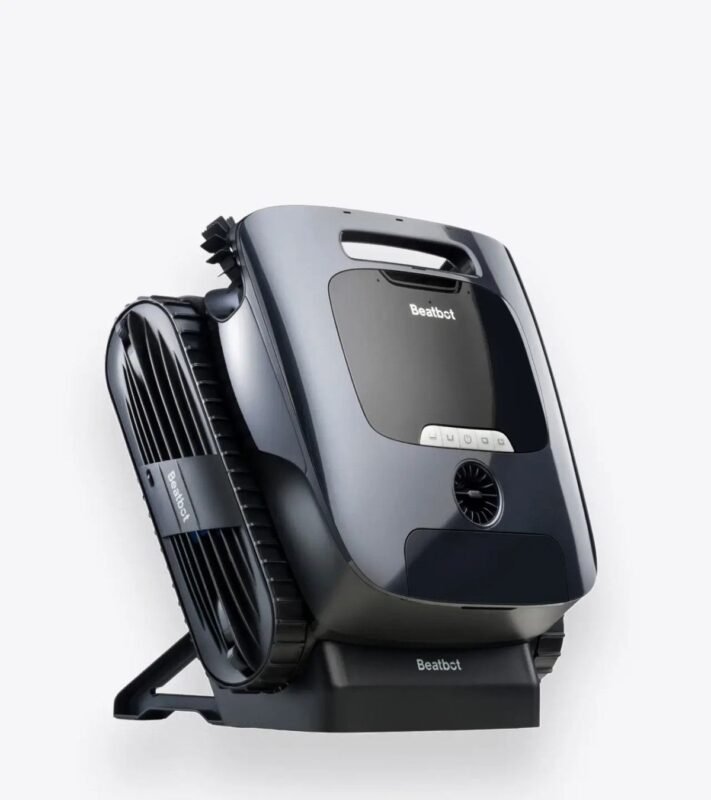
Deploying a dedicated robotic pool vacuum solves this structural waste. Instead of wandering aimlessly like older cleaners, next-generation systems use sonar-based mapping. They see the pool. They calculate the shortest path. Advanced models, such as the AquaSense 2 Ultra, achieve total coverage in a fraction of the time by following a mapped route rather than bouncing off walls.
The result is a direct hit on your utility bill. Estimates show that delegating the heavy cleaning to a low-voltage robotic unit can cut primary pump runtime by nearly 30%. In markets where electricity rates are at a premium, this change pays for itself. When the machine is smart enough to understand the environment, you stop paying for unnecessary repetitions.
Protecting the Backyard’s Most Expensive Asset
A swimming pool is likely the most expensive single feature on your property. Its life is tied to how you treat the surfaces. Fine sand and grit at the bottom might look harmless, but they act like sandpaper under the feet of swimmers. Every step grinds that silt into the plaster or thins out the vinyl liner. Neglected maintenance often leads to the chalky ring that forms along the waterline—a buildup of oils and minerals that eventually hardens into a permanent stain.
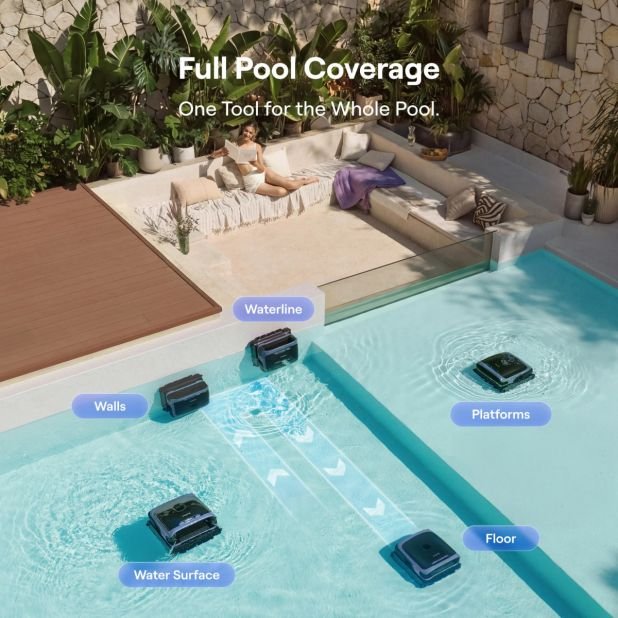
Modern autonomous systems provide the “micro-maintenance” that prevents this damage. These units don’t just pick up leaves; they scrub the waterline where algae first takes hold. By removing organic matter before it breaks down, you stabilize the water chemistry. This means fewer “shock” treatments and less heavy chlorination, which preserves the life of your plumbing and heaters. It’s an insurance policy for your home equity. The goal is to keep the pool a liquid asset rather than a growing liability.
The Future of Frictionless Outdoor Living
By the time the sun rises, the difference between a legacy backyard and a truly smart home is clear. In a legacy home, the owner wakes up to a list of demands: hoses to untangle, skimmers to empty, and chemicals to balance. In the automated home, the pool has already been mapped and cleaned while the family slept.
The move toward dedicated aquatic intelligence is a decision to prioritize your own time. The manual pool skimmer is becoming as obsolete as the dial-up modem. As the technology behind sonar and battery density continues to improve, the gap between the “manual home” and the “autonomous home” will only widen.
Some homeowners will continue to spend their weekends fighting the grit. Others will let the machine handle the labor. In a fully integrated smart home, aquatic automation is no longer optional—it is foundational infrastructure.