
Skip to the good bit
ToggleIn an era of digital saturation, the traditional “Happy Birthday” post or e-card has lost much of its emotional resonance. The friction of sending a digital greeting is so low that it often feels perfunctory. To cut through the noise, individuals are seeking ways to increase the perceived “effort value” of their social interactions without necessarily requiring master-level skills. This search for novelty has led to the adoption of the AI Song Generator not as a professional production tool, but as a medium for interpersonal connection. By turning specific memories or inside jokes into fully produced songs, users are reviving the tradition of the “serenade” in a scalable, digital format.
Analyzing the emotional economy of customized media
The value of a gift is often measured by the thought and specificity invested in it. A generic pop song sent to a partner has less impact than a song that explicitly mentions their name, their quirks, or a shared experience. The barrier to entry for creating such a gift was previously insurmountable for the non-musical majority. Writing lyrics, composing a melody, and recording vocals required a convergence of talents that few possess.
Bridging the capability gap with generative synthesis
The current generation of audio synthesis tools acts as a bridge between intent and execution. A user can have the emotional intelligence to write a touching poem (or a funny limerick) but lack the musical ability to perform it. The AI engine takes this textual input and applies musical prosody—matching the rhythm of the words to a generated melody. This allows the user to focus entirely on the sentiment of the message, while the algorithm handles the *delivery*.
Transforming inside jokes into audible artifacts
One of the most compelling use cases observed is the “meme-ification” of friendship. Groups of friends use the platform to generate over-the-top dramatic ballads about mundane events, such as a friend losing their keys or a failed cooking experiment. The juxtaposition of high-quality, serious musical composition with trivial or humorous lyrics creates a unique form of comedic content that strengthens social bonds.
Executing the personalization workflow effectively
Creating a personalized audio gift requires a different approach than generating background music. The focus shifts from “mood” to “narrative.” The lyrics become the primary driver, and the musical style serves as the packaging.
Step 1: Crafting the narrative lyrics
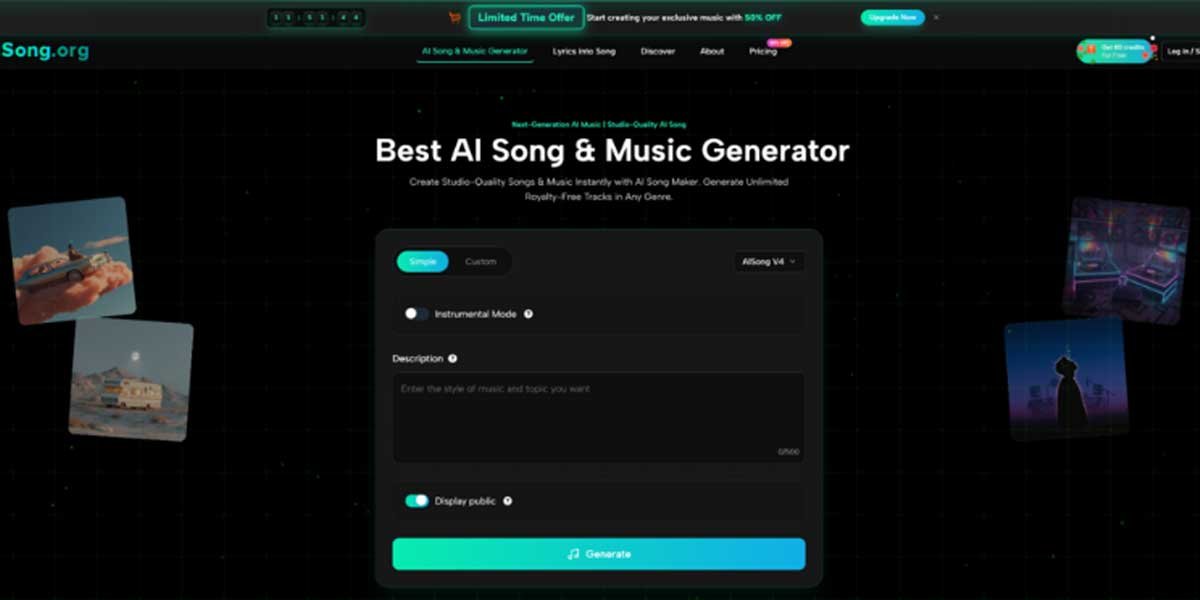
The process begins with the “Lyrics Editor” or the “Text to Music” feature. Unlike professional songwriting, where ambiguity is often preferred, personalized songs benefit from hyper-specificity. Including proper nouns, specific dates, or location names grounds the song in reality. The AI’s ability to process these non-standard lyrical inputs and fit them into a rhyme scheme is the critical technical enabler here.
Step 2: selecting an incongruous or complimentary genre
The impact of the gift often lies in the choice of genre. There are two main strategies: congruency (e.g., a soft acoustic track for a romantic message) or incongruency (e.g., a heavy metal track for a lullaby). The “Style” selector allows users to experiment with these pairings. Incongruity tends to generate higher engagement and “shareability” within social circles.
Step 3: generating and refining the delivery
Once the parameters are set, the engine synthesizes the vocal track. If the pronunciation of a specific name is off, or the emotion doesn’t match the text, the user can regenerate the track. This iterative process allows the creator to curate the final output until it matches their internal representation of the relationship.
Comparing standard digital greetings with AI-generated audio
The following table highlights the difference in recipient impact between traditional digital gestures and generated audio.
| Feature | Standard E-Card / Text | AI Music Generator |
| Uniqueness | Low (Template based) | High (Unique generation) |
| User Input | Selection of pre-made assets | Creative direction / Lyrics |
| Retention | Low (Viewed once) | High (Replayed/Saved) |
| Emotional Weight | Perceived as low effort | Perceived as high effort |
| Shareability | Low | High (Viral potential) |
Understanding the limitations of vocal synthesis
While the technology is powerful, it is not a human vocalist. The emotional nuance in a generated voice can sometimes feel “flat” or overly perfect. For a heartfelt anniversary gift, this lack of human imperfection might be a drawback. However, for humorous or lighthearted messages, the slight robotic timbre often adds to the charm rather than detracting from it. Users should manage their expectations: the goal is to convey a message uniquely, not to fool the recipient into thinking a professional choir was hired.
Navigating the privacy of personal data in lyrics
When inputting personal details into any cloud-based generator, users should remain mindful of data privacy. While the platform processes text to generate audio, it is generally good practice to avoid using sensitive personally identifiable information (like full addresses or financial data) in the lyrics. The creativity should focus on personality traits and shared stories rather than private data points.