
Kids’ rooms change fast, but your walls do not need a full repaint every year. With kids’ room wallpaper, you can create a space that feels magical now and still works when tastes shift.
This guide covers age-smart themes, where wallpaper performs best in bedrooms and play zones, and what materials hold up to real life. You will also get a simple install plan and quick update ideas.
Why Wallpaper is Perfect for Kids’ Rooms
Wallpaper can set the whole mood with one strong wall. That helps you avoid filling the room with extra décor and clutter. A single scene or pattern can spark pretend play, make bedtime feel cosier, and give the room a clear “center.”
It also supports change. When a crib becomes a toddler bed, or toys turn into textbooks, wallpaper lets you refresh the look with less disruption than paint. Removable options make those updates even easier.
In 2026, flexible styles will stay popular. Gender-neutral palettes feel more polished, and educational motifs look like real design. Maps, constellations, and nature sketches can feel calm and current for years.
Popular Themes and Age-Appropriate Choices
Pick themes that suit the child’s stage and the room’s job. Sleep zones need calmer visuals. Play zones can handle more energy.
Nursery (0-2): Soft Pastels and Gentle Animals
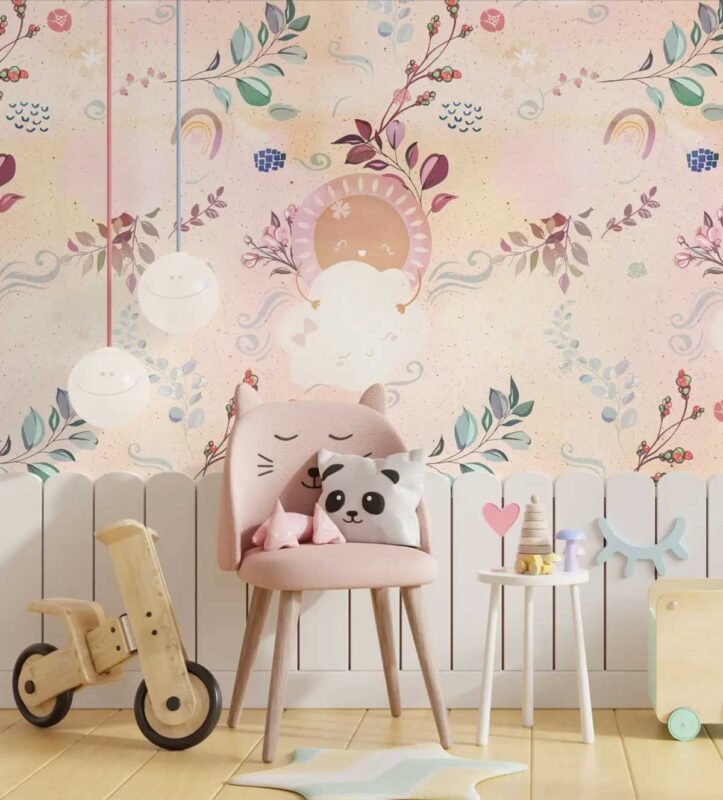
For babies, keep contrast moderate and shapes simple. Soft animals, clouds, and gentle botanicals work well as nursery wallpaper, especially under warm lamps. Matte finishes usually feel softer and reduce glare during night feeds.
Best approach: one feature wall behind the crib or changing station, with lighter walls elsewhere. The room stays restful and easy to style.
Toddler to School Age (2-8): Space, Dinosaurs, and Woodland
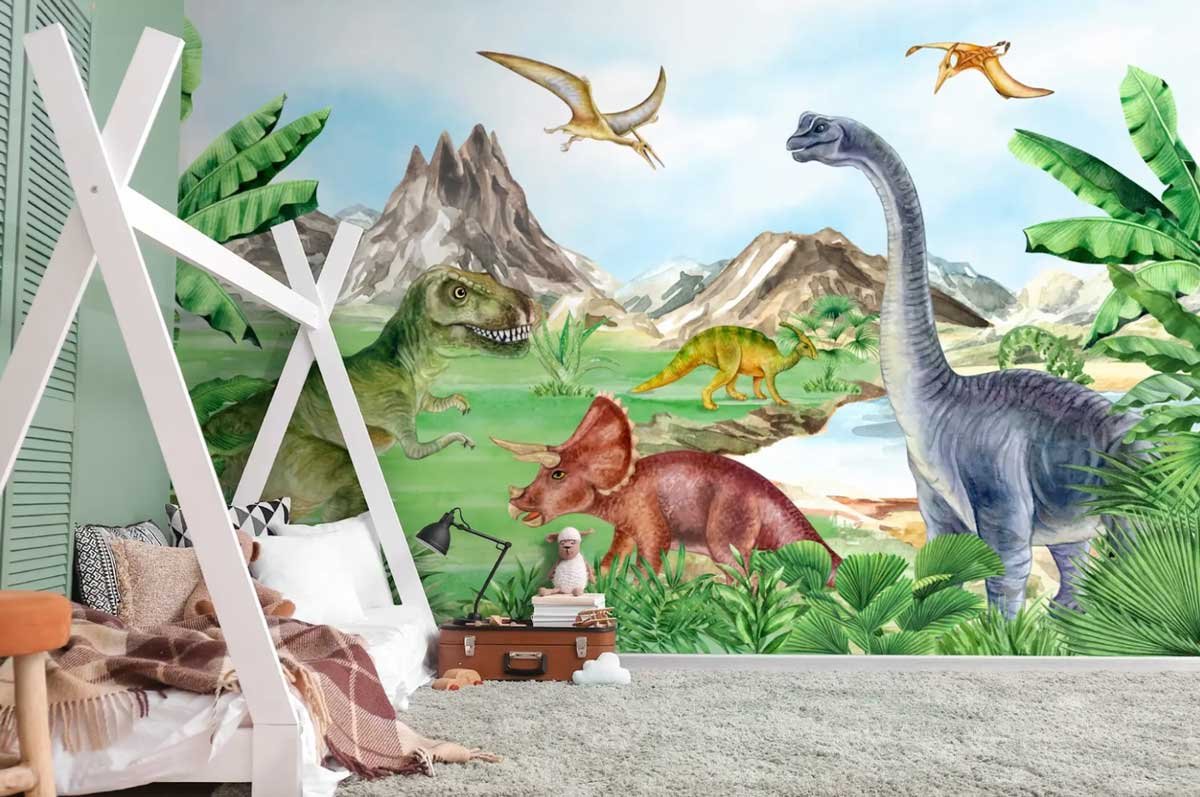 This age loves bold themes, but the room still needs balance. Space, dinosaurs, and woodland scenes add instant fun. Since these rooms take more wear, choose finishes that clean easily.
If you want maximum impact with minimal commitment, use one mural-style wall and keep the rest calmer. Broader themes age better than niche character-style prints.
Pre-Teen to Teen (9+): Modern Graphics and Sophisticated Patterns
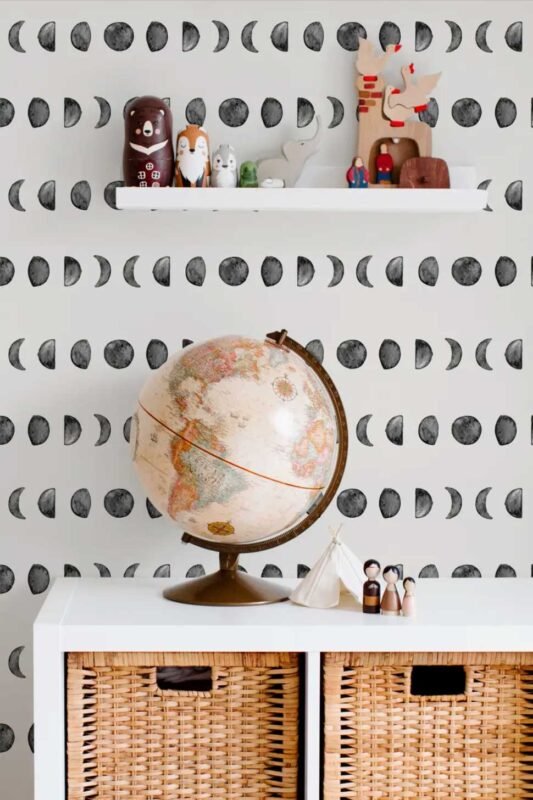
Older kids often want a room that feels less “little.” Clean stripes, abstract shapes, and tonal geometrics work well. If you want something that still feels playful, choose a graphic pattern with a limited palette.
Ask your child to pick two main colors and one accent. Then choose a design that supports that palette. This cuts down on regret later.
Room-by-Room Applications
Placement matters as much as theme. A bold wall can energize play, yet feel too active near a bed.
Nurseries and Bedrooms: Balancing Fun with Restfulness
Bedrooms work best with one focal wall behind the bed or crib. Keep other walls quieter to support calm evenings. If you want kids’ wallpaper for walls across the whole bedroom, choose low contrast and a softer repeat.
Scale matters in small rooms. Tiny repeats can feel busy up close. Oversized motifs can overwhelm tight spaces. Medium scale usually feels safest.
Playrooms: Maximizing Energy and Learning
Playrooms can handle stronger patterns and colors. A statement wall can define the play zone and reduce the need for extra décor. A good playroom wallpaper choice has clear shapes and some breathing room, so it stays readable when toys are out.
If the playroom shares space with adults, keep storage walls neutral. Let one wall do the “fun” work.
Study Areas: Educational and Focus-Enhancing Designs
Study areas need fewer distractions. Choose calm educational prints, like minimal maps or simple charts. Avoid high-detail scenes right next to a desk.
Place wallpaper where it frames the study zone rather than competing with it. Warm task lighting also helps reduce glare and supports focus.
Safety and Material Considerations
Kids touch walls constantly, so materials need to be practical. Aim for low stress: low odor, easy cleaning, and finishes that suit each zone.
Non-Toxic and Low-Odor Basics
Parents often prefer low-odor options and inks described as low-VOC or VOC-free, especially for nurseries. Ventilation still matters. Open windows when possible and keep air moving with a fan. If your child is very young, let the room air out before long sleep stretches.
Durability and Cleanability
Washability is key for fingerprints and scuffs. Wipeable finishes tend to work best in high-touch areas, while softer matte looks suit sleep zones.
| Room zone | Best finish | Why it helps |
| Bedroom/Nursery | Matte or smooth non-woven | Calmer look, less glare |
| Playroom | Wipeable or vinyl-coated | Easier cleanup |
| Study area | Low-glare, medium-scale print | Helps focus |
Color also affects mood. Softer tones often calm. Brighter accents can energize play. If bedtime is a struggle, reduce contrast near the bed.
Installation and Customization
Good prep matters more than fancy tools. Clean walls, smooth bumps, and take your time with the first panel.
DIY Peel-and-Stick Installation
Removable wallpaper works best on smooth, clean walls. Peel-and-stick kids wallpaper can be lifted and repositioned during installation, which helps beginners.
Quick steps:
- Clean the walls and let them dry fully.
- Patch dents and sand bumps smooth.
- Mark a plumb line for the first panel.
- Smooth from top down, then center outward.
- Lift and reset to remove bubbles.
- Trim with a sharp blade and replace it often.
Personal Touches and Coverage Choices
Personalization ages best when it stays subtle. Names, initials, and small monograms can feel special for years. For photos, framed art usually lasts longer than printing images on the wall.
Feature walls give the best payoff for most families. Full coverage can work in small rooms with soft patterns, but it raises cost and makes updates harder.
Practical Tips for Parents
If you want designs that last, choose broad themes and controlled palettes. Nature, stars, maps, and clean graphics tend to age well. When you gather kids’ room wallpaper ideas, focus on placement and color first, then theme.
Keep budgets predictable with samples and a plan. Check samples in daylight and at night. Buy a small buffer for repairs and keep leftovers stored flat.
Quick refresh in 30 minutes:
- Swap bedding or curtains in one new accent color
- Rotate wall art and simplify clutter
- Change a lamp shade for a warmer light
- Update one small zone, like a reading nook
A kids’ room can feel magical without becoming a constant project. Pick a flexible theme, use durable finishes where little hands reach, and let one focal wall carry the design.